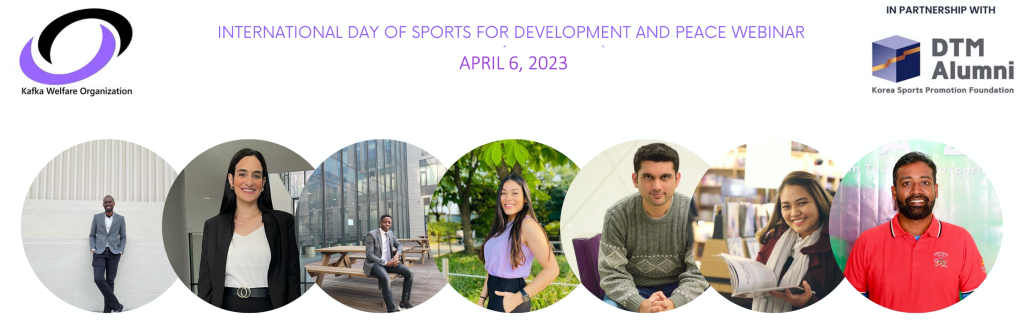
Kafka Welfare Organisation in partnership with the Dream Together Masters Alumni hosted the 4th edition of the International Day of Sport for Development and Peace webinar on the 6th of April. The webinar coincided with the International Day of Sport for Development and Peace marked globally every year.
The webinar was moderated by Gobinath Sivarajah, Marketing and Media Manager of the National Olympic Committee in Sri Lanka, and included Sarah Moamen Abdelsamie, an IOC Young Leader and former professional volleyball player from Egypt, Deandra Farnita, a Sport for Development Practitioner and Researcher, currently working as a class supervisor in Norway, from Indonesia, Taymaa Qatamesh, a former national team football player, a football coach cum manager assistant from Palestine, Lawrence Tapiwa Kamukapa a sports administrator and co-founder of the Academy of Hope from Zimbabwe, Nashon Owano, a Sports Journalist, and Content Creator from Kenya and Pakistani Umair Rana, Founder of Kafka Welfare Organisation and reading PhD in University of Quebec in Montreal, Canada.
The speakers L-R: Nashon, Sarah, Lawrence, Taymaa, Umair, Deandra, and Gobinath
The key theme highlighted by the panellists included how sports contribute to SDGs and the challenges faced by sports for development and peace campaigns in developing countries. They also highlighted the role of sports in social development and its contribution to women’s empowerment, gender equality, and community building in the Global South. With stakeholders playing a crucial role in the growth of sports, the discussion centred on how more stakeholders should be involved in capacity-built sports initiatives in developing countries.
The session started with the IOC Young Leader and former professional volleyball player Sarah Moamen Abdelsamie highlighting some of the sports initiatives she has worked on in Egypt that target refugees and students to help them deal with mental health.
“The initiative combines physical health, mental health, and family network by helping them deal with family insecurities to help address the sustainable development goals.”
Speaking during the session Umair Asif, Founder of Kafka Welfare Organization underscored the role that sports play in promoting values and acting as a tool for creating an inclusive society
“As young leaders from the Global South, we understand that sports have the power to transcend boundaries and bring people together. Through sports, we can promote values such as teamwork, respect, and fair play, which are essential for building peaceful and inclusive societies. Let us harness the power of sports to drive positive change and create a brighter future for all.”
On his part, Lawrence Tapiwa Kamukapa a sports administrator and co-founder of the Academy of Hope pointed out the role that sports play in empowering and building stronger communities.
“Sports can play a vital role in fostering development and peace by promoting inclusivity, building bridges across communities, and empowering individuals and groups to overcome social, cultural, and political differences through healthy competition and cooperation.”
In underscoring the role of stakeholders in the development Mohammad Amer said that stakeholders are an important part of the sports development agenda.
“Collaboration between stakeholders is crucial to ensure sustainable development through sport, and SDP programs must be designed with a focus on the specific needs of communities they serve to ensure effectiveness to empower young people to become agents of change and create a more peaceful and equitable world,”
Gobinath Sivarajah the moderator of the day emphasized more on the need for sustainability of sports initiatives and programs.
“The sustainability of the SDP programs is very important to inculcate the values and create positive vibes among the vulnerable groups through a continuous process. Therefore, the implementors should play their roles seriously by developing strategic plans to conduct the programs for the long run,”
Taymaa Qatamesh a former national team football player, reiterated the need for SDP programs to address social and health issues that touch on more people in society.
“There is a need to incorporate more pertinent issues that affect the community in SDP programs so that the youth can feel more engaged an important aspect that could provide sustainability for such programs.”
While acknowledging the need to practice community involvement in setting up Sports initiatives Deandra Fanita a Sport for Development Practitioner and Researcher, reiterated the role of involving the community in setting up and running sports initiatives.
“Sports academies should have community dialogues and involvement where they exist because they are the key component of the society that could define the success of the initiatives by making the locals feel involved in SDP programs in the community.”
In addressing the role that the media plays in enhancing the image of SDP programs Nashon Owano a Sports Journalist, and Content Creator from Kenya pointed out that the media could either guarantee the success of SDP programs or their failure.
“The media has a big role in the success and failure of SDP programs when the initiatives are portrayed in good light this could encourage more people to join sports. When the programs are pained in a bad light this could attract more stakeholders.”
Speakers support the #whitecard campaign after the webinar
Focus now shifts to the fifth annual event by the DTMA to commemorate the International Day of Sport Development and Peace will be on April 6, 2024.
Seoul - This is a proposal submitted to Hon. Moon Jae-in, the President of the Republic of Korea on 23 May 2018 by Gobinath 'SiGo' Sivarajah -
1.1 Overview of PyeongChang 2018
PyeongChang 2018, the 23rd Winter Olympic Games proved a successful and peaceful Winter Olympic Games, promoting regional development and prospects for Korean unification. The PyeongChang Olympic Games ran from 9 – 25, February 2018. Approximately 3000 athletes from 92 National Olympic Committees (NOCs) participated in 102 events – all Games records. Moreover, 25 Olympic records and three world records were broken during the PyeongChang Winter Games.
In the lead-up to the Games, North Korea had launched 11 missiles over the Pacific Ocean which threatened not only South Korea but also the globe in taking part in the Olympic Games. Some countries were expressing concern over attending the 2018 Games. Suddenly, one month prior to the Games, everything came on the right track. North and South Korea marched together in the opening ceremony and players from both nations played in a joint women’s ice hockey team which added a positive impact to the Olympic Movement – Peace Olympics, later, PyeongChang was called the safest Olympics ever in history.
Figure.1: Facts and figures of PyeongChang 2018
The Games totally cost USD 14 billion. Of that, USD 12 billion was spent on infrastructure, including a high-speed rail line (KTX), venues, expressways, and roads. Moreover, Mr LEE Hee-beom, the president of the PyeongChang 2018 Organising Committees (POCOG) mentioned in a speech delivered to the Dream Together Master (DTM) students at Seoul National University that POCOG, which was in the red last year, now anticipates a surplus, with Olympic ticket sales – among other revenue items – at 100.9 per cent and the Games boosted South Korean GDP by 0.2 per cent.
Since Korean population density is dramatically increasing, the KTX, expressways and roads will be highly used and will generate more revenue for the country which is ideal and good for the country. On the other side, the main arena, which was used for the opening and closing ceremonies, is going to be demolished. Sadly, there is no proper legacy plan found to be to sustain the newly built venue facilities for long-term usage. In this case, the sports facilities’ legacy has been a question mark even after finishing the games, for the last two months. Also, it costs a lot even to keep the facilities just like the Olympic museum. Therefore, there is a necessity to develop a sustainability and legacy plan for the Pyeongchang 2018 facilities to utilize the venues without any loss in the future.
2.1 Previous Olympic Games Legacy Failures – Abandoned Olympic Venues
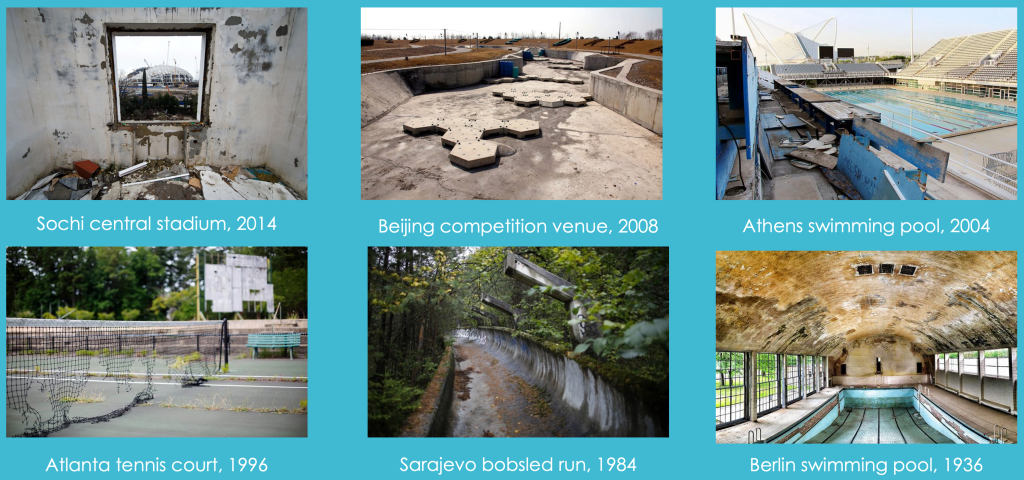
Throughout the Olympic history, host cities spend billions of dollars on sports facilities infrastructure constructions and renovations for every Olympics to show itself globally as a modern, well-designed and well-run metropolis with modern facilities and infrastructure symbolic of the quality of life and economic investment. But, once the Games are over, it is obviously seen that most of the Olympic facilities become white elephants. There are many stadiums and venues in the past Olympics are abandoned, looted and damaged as they are not used due to huge maintenance costs and a lack of support and coordination between commercial providers and public governing bodies (Vassilios Ziakas, 2014).
Figure.2: White Elephants
Kissoudi (2008) mentioned that the Athens 2004 Olympic Games provided the host city with an excellent opportunity, but later, it became a splitting headache for the government, which experienced harsh criticism from all the political parties. Now, the sporting extravaganza, many of its once-gleaming Olympic venues now lie abandoned.
Azzali (2016) concluded about the Sochi 2014 economic side was probably the most unsuccessful one as the final expenditure of USD 55 billion, was the most expensive Olympics ever. The event was mainly publicly funded, and all the facilities were built over capacity, with the railway and road infrastructure itself costing more than USD 10 billion. All the sports venues are now closed or underutilized, and the park, with the exception of the weeks before the Formula 1 race, is abandoned.
Nine venues were built for Sarajevo 1984 Winter Olympic Games. After their sixteen-day spotlight, the venues were immediately abandoned as the region grew unstable and ultimately fell into civil war less than ten years later. Several, such as the bobsled venue, were used as military installations throughout the Bosnian war. They have remained abandoned ever since (Ponic, 2017).
Many venues of the previous host cities, such as Rio 2016, Beijing 2008, Grenoble 1968, and Berlin 1936 have been abandoned. This obviously explains that many countries hosted Olympic Games without any long-term legacy plans which lead them to the disaster. Also, past experiences showed that outcomes from staging major events are mostly harmful and negative, especially if one considers how sports facilities and their surroundings are utilized after the end of the event. In the end, these abandoned venues teach a lesson that the Olympic Games are a giant waste of money.
2.2 Success of PyeongChang 2018, Prior to the Games
The success of an Olympic Games or mega sporting event is not only about the game quality or infrastructure developments but it is depending on its legacy place as well. One of the missions of the International Olympic Committee (IOC) – ‘promoting a positive legacy from the Olympic Games to the host cities and host countries’ is important to spread the Olympic spirit, which can be achieved through pre and post-Olympic Games activities.
In this way, Dream Program was initially launched by PyeongChang in 2004 as a part of its bid for the 2010 Olympic Winter Games to expand winter sports, promote friendship among youths, and contributed to peace around the world. Dream Programme has been held 14 times from 2004 to 2017 and played a huge role in introducing winter sports to the youths in Korea. The IOC, winter international federations such as the International Ski Federation and International Skating Union, the foreign media and National Olympic Committees were the primary stakeholders of the programme. Since then, 1,574 youths including 105 with disabilities from 75 countries participated. Many athletes benefited from the tropical developing countries especially, from Africa and Asia, 521 and 534, respectively.
Dream Program offered an educational program and seven million people benefited through the program during which they learned about Olympic values.
3.1 Olympic Solidarity Plan 2017-2020
Olympic Solidarity is an IOC organisation and its aim is to organise assistance for all the National Olympic Committees (NOCs), particularly those with the greatest needs, through multi-faceted programmes prioritizing athlete development, training of coaches and sports administrators, and promoting the Olympic ideals.
In PyeongChang 2018, more than 270 athletes and 13 teams benefited from the Olympic Solidarity scholarship. This scholarship included a fixed monthly training grant to cover training and coaching costs, and a travel subsidy which enabled the holders to participate in Olympic qualification competitions.
The Olympic Solidarity plan 2017-2020 is developed and its development and assistance budget is over USD 500 million with a strong focus placed on athletes’ training and development in line with the Olympic Agenda 2020 to develop youngsters, athletes, leaders and coaches. 21 world programs are offered in this plan under major five units of athletes, coaches, NOC management and knowledge sharing, promotion of the Olympic values, and forums and special projects.
The key objectives of the Olympic Solidarity plan 2017-2020 are,
increasing assistance for athletes and supporting NOCs in their efforts to protect clean athletes,
focusing on the NOCs with their greatest need, and
promoting Olympic Agenda 2020 concepts through advocacy and education.
Figure.3: Olympic Solidarity plan 2017-2020 budget
3.2 Warm-weather and Developing Countries in Winter Sports
Nowadays, developing countries are much interested in developing sports in their regions. Six countries stepped into Winter Olympics for the very first time at PyeongChang 2018. Interestingly, four countries out of the above six, Malaysia, Ecuador, Eritrea, and Nigeria are warm-weather developing countries. Approximately 40 tropical nations have already participated at least in a Winter Olympics, ten each from Africa, and, Central and South America, eight from the Caribbean, and six Asian countries, in which, most of them are developing countries.
The Dream program helped many warm-weather and developing countries to initiate winter sports. Sri Lanka, Vietnam, Pakistan, Hong Kong, Ecuador, Rwanda and the UAE are some of the countries that benefited from the program. Since they do not have snow and ice rink facilities in their countries they could not able to continue their practices to enhance their skills and become elite athletes to compete at regional or international level competitions.
By considering the newly built available facilities at the PyeongChang, financial aid from the Olympic Solidarity and local bodies, and identified major issues and needs for developing countries in developing winter sports around the globe, I have proposed a feasible sustainability and legacy plan for PyeongChang 2018 Winter Olympic facilities in the next part of this proposal.
4.1 Sustainability and Legacy Plan
PyeongChang 2018 is already considered a successful Olympic Games. It should not go unused after the games and become a white elephant. PyeongChang facilities are newly built, as it was the very first Winter Olympic Games for South Korea, with frugal costs compared to the previous two Winter Olympics. By considering previous host cities’ issues, I have proposed a model to sustain the facilities as the PyeongChang 2018 Legacy in order to create a win-win situation for the local and international sport institutions.
In order to create a sustainability and legacy plan, PyeongChang facilities, the NOCs of developing countries and Olympic Solidarity are identified as key stakeholders to sustain the PyeongChang 2018 facilities. Also, there are other organisations and sponsoring companies will also be working in a partnership manner. Figure.2 sustainability and legacy model explains it in detail.
Figure.4: Sustainability and legacy model for PyeongChang 2018 facilities
Figure 2 illustrates that some of the organisations provide or receive only money, some receive support and some other organisations provide both money and support. This is how a symmetrical model was developed to sustain the PyeongChang 2018 facilities.
The following chapter explains the roles and responsibilities of each organisation in detail for the success of this sustainable and legacy plan for PyeongChang 2018.
4.2 Winter Sports Facilities
4.2.1 Facilities in Developing Countries
The biggest problem of most of the developing countries and newly winter sports introduced countries is building new winter sports venues. Even if they build an ice rink, again there will be a question, of how to maintain it at a high cost. Winter sports facilities are often harder to maintain and building sporting facilities for high cost because of requiring higher technologies and resources for maintaining ice and snow. Also usually a smaller number of people practice winter sports compared to summer sports.
On the other hand, if it is a warm-weather or tropical country, it is almost impossible to set up a snow sporting arena even with artificial snow. To all those requirements for maintenance, high-tech facilities with the best humidity management technologies must be stable, controlled air conditions inside the facility, regardless of season or weather outside and have better snow and ice conditions.
4.2.2 PyeongChang Facilities
PyeongChang 2018 Winter Games competition facility consists of two main clusters, the PyeongChang mountain cluster and the Gangneung coastal cluster which consist of seven and five venues, respectively. Also, PyeongChang facilities were newly built to launch New Horizons in winter sports and create a sustainable legacy for Gangwon Province and the Republic of Korea. Now, the most successful Winter Olympic Games hosting country, South Korea has a great opportunity to provide similar to those European training facilities and the service to the world of winter sport, especially in Asia and Africa. As a part of the Pyeongchang 2018 Winter Olympic Legacy, South Korea has already succeeded with Dream Program which invited many youths, from little snow regions or from countries where winter sports are not widely known, to Pyeongchang.
To implement this proposal, firstly, a steering committee should be formed under the name of sustainability and legacy committee for PyeongChang facilities (SLCPF) which could be formed with members from the Korean Sport and Olympic Committee (KSOC), Ministry of Culture, Sports and Tourism (MCST), experts and Korean leading sports sponsors or partners. Their primary task for PyeongChang facilities will be to provide training facilities such as sporting venues, equipment, coaches, and accommodation.
4.3 Participant Countries and Athletes
PyeongChang 2018 was launched with the slogan of ‘Passion.Connected.’ which refers to ‘a world open to any generation anywhere, anytime, to open new horizons in the continued growth of winter sports’. In this proposal, this slogan leads to the legacy plan. The NOCs who do not have any winter sports facilities in their countries, especially in warm-weather countries will get benefits through this plan. Athletes can be beginners or elite athletes, but all the athletes’ participation must be through their respective NOCs.
Professional winter sports athletes should take their training in authentic snow and ice arenas. Artificial snow is not suitable if they are going to take part in international-level competitions. That is why most winter sports elite athletes go to European countries, such as Norway, Switzerland, Sweden, and other countries for professional training camps to train and prepare themselves for international-level events. An athlete pays approximately USD 650 for a seven-day training camp in Switzerland. Most athletes train more than a week, and it takes years as well. Therefore, PyeongChang facilities will be more attractive to the Asian and African developing countries as the facilities are newly built with modern technologies.
4.4 Funding and Supports
4.4.1 Olympic Solidarity
Olympic Solidarity is the prime funding organisation for this project. This project could be fixed under world programmes. As shown in the Figure.1, USD 87 million and USD 33 million have been already allocated for athletes and coaches, respectively for 2017-2020. For the long-term success of this project, the NOCs and SLCPF have to approach the Olympic Solidarity to request funds according to their number of athletes and their needs. This will cover the athletes’ necessary needs for the training at PyeongChang as well as the coaches’ costs and facilities’ sustainability costs.
Above-mentioned both parties can approach Olympic Solidarity funding under the three sections mentioned in the Olympic Solidarity Plan 2017-2020 manual.
Athletes
Team support grant
Continental athlete support grant
Youth Olympic Games – athlete support
2. Coaches
Technical courses for coaches
Development of a national sport system
3. Promotion of the Olympic values
Sustainability in sport
Olympic education, culture and legacy
4.4.2 Local Sponsors and supports
The Olympic Solidarity funding definitely will not be enough to cover all the costs. Therefore, the NOCs will have to seek for local sponsors to fulfil the total cost for the success of this project.
Also, the MSCT will support the SLCPF directly, and athletes and coaches will be supported by their respective NOCs via their NFs for the success of this project and in the development of winter sports in their country and the globe.
4.5 Programs and Competitions
Since this project is going to be funded and supported by many local and international sport entities and provides service to all, therefore, the PyeongChang facilities could be named as PyeongChang Olympic Training Centre so as to provide winter sports for all. Under this PyeongChang Olympic Training Centre, I propose some feasible programs and competitions.
Grass-root level and youth athletes’ training programs
Elite athletes’ training programs
Coaches coaching programs
PyeongChang 2018 Mini Olympics: In order to commemorate PyeongChang 2018, national or regional level competitions for the youths every year in February.
4.6 Benefits of the Project
Through this project, many parties will be benefited in many ways. But, it will highly impact South Korea’s many developments, mainly,
Pyeongchang facilities will sustain for long-term;
PyeongChang will become a centre for all the warm-weather developing countries;
Current expenditure on PyeongChang facilities will reduce;
Winter sports will develop;
Gangwon province’s regional development will improve;
Job opportunities will be created;
It will strengthen strategic partnerships with NOCs, Olympic Solidarity and local sponsors; and
Tourism will eventually increase.
The proposed strategic approach to sustain the PyeongChang 2018 facilities is also aligned with the objectives of the legacy strategic approach of the IOC. This proposal is developed with the available resources, based on the previous Olympic facilities’ abandoned experiences to meet the Olympic legacy’s four objectives, and make a win-win situation for all relevant bodies. Also, the proposal is made by considering the economic stabilities and utilising the facilities with maximum usage rate. Lastly, as the IOC President Thomas Bach mentioned in his farewell address that PyeongChang 2018 is a “Games of New Horizons”, this proposal will also carry the name as the legacy of PyeongChang 2018.
Reference
Azzali, S. (2016). The legacies of Sochi 2014 Winter Olympics: an evaluation of the Adler Olympic Park. Urban Research & Practice, 10(3), 329-349. doi:https://doi.org/10.1080/17535069.2016.1216586
IOC Legacy Strategic Approach: Moving Forward. (2017, 12 5). Lausanne: International Olympic Committee.
Kissoudi, P. (2008). The Athens Olympics: Optimistic Legacies – Post-Olympic Assets and the Struggle for their Realization. The International Journal of the History of Sport, 1972-1990. doi:10.1080/09523360802439049
OLYMPIC AGENDA 2020. (2014). Lausanne: International Olympic Committee.
Olympic Charter. (2017). Lausanne: International Olympic Committee.
Olympic Solidarity Plan 2017-2020. (2017). Lausanne: International Olympic Committee, Olympic Solidarity.
Vassilios Ziakas, N. B. (2014). Post-Event Leverage and Olympic Legacy: A Strategic Framework for the Development of Sport and Cultural Tourism in Post-Olympic Athens. Journal of Sports, 87-101.
Abbreviations
ANOC – Association of National Olympic Committees
DTM – Dream Together Master
GDP – Gross Domestic Product
IOC – International Olympic Committee
KNFs – Korean National Sports Federations
KSOC – Korean Sport and Olympic Committee
KTX – Korea Train eXpress
MCST – Ministry of Culture, Sports and Tourism
NFs – National Sports Federations
NOCs – National Olympic Committees
POCOG – PyeongChang Organizing Committee for the 2018 Olympic Games
SLCPF – Sustainability and Legacy Committee for Pyeongchang Facilities
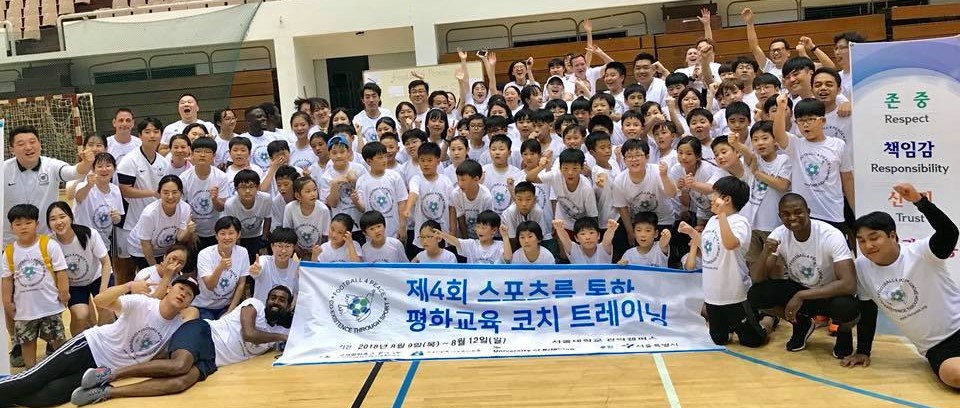
SEOUL — The 4th Peace Education through Sports Korea Coach Training is successfully concluded at Seoul National University.
A four-day training camp on ‘Football 4 Peace’ — F4P held at the Seoul National University from 09–12 August 2018 was hosted by Football 4 Peace Korea, Korean Sharing Movement. The F4P is not only a sports skill and technical knowledge enhancement program but also it teaches values-based sport coaching methodology through the medium of football. F4P aims to promote positive values associated with good citizenship. Especially, the F4P focuses on promoting the values of equity, inclusion, trust, responsibility and respect through football and rugby.
Football 4 Peace Resource Persons, Coaches and Kids
The first three days of the camp was designed to learn together the F4P International values-based coaching methodology, lectured by Graham Spacey and Warren Smart, the senior lecturers of the University of Brighton, the U.K and their students, Kelly Cranshaw, Millie Webb, Haemin Jung, Nicholas Anderson, Daniel Stidder also joined with them as resource persons for practical sessions on and off the fields. Also, Dan Gudgeon, the director of Football 4 Peace Korea, Korean Sharing Movement and some of his colleagues also were the resource persons for the camping. Some 50 participants from various universities and schools in Seoul took part in the training camp and they were awarded certificates for their active participation with a graded level of their achievement in the Cross-Community Sport Development Workshop.
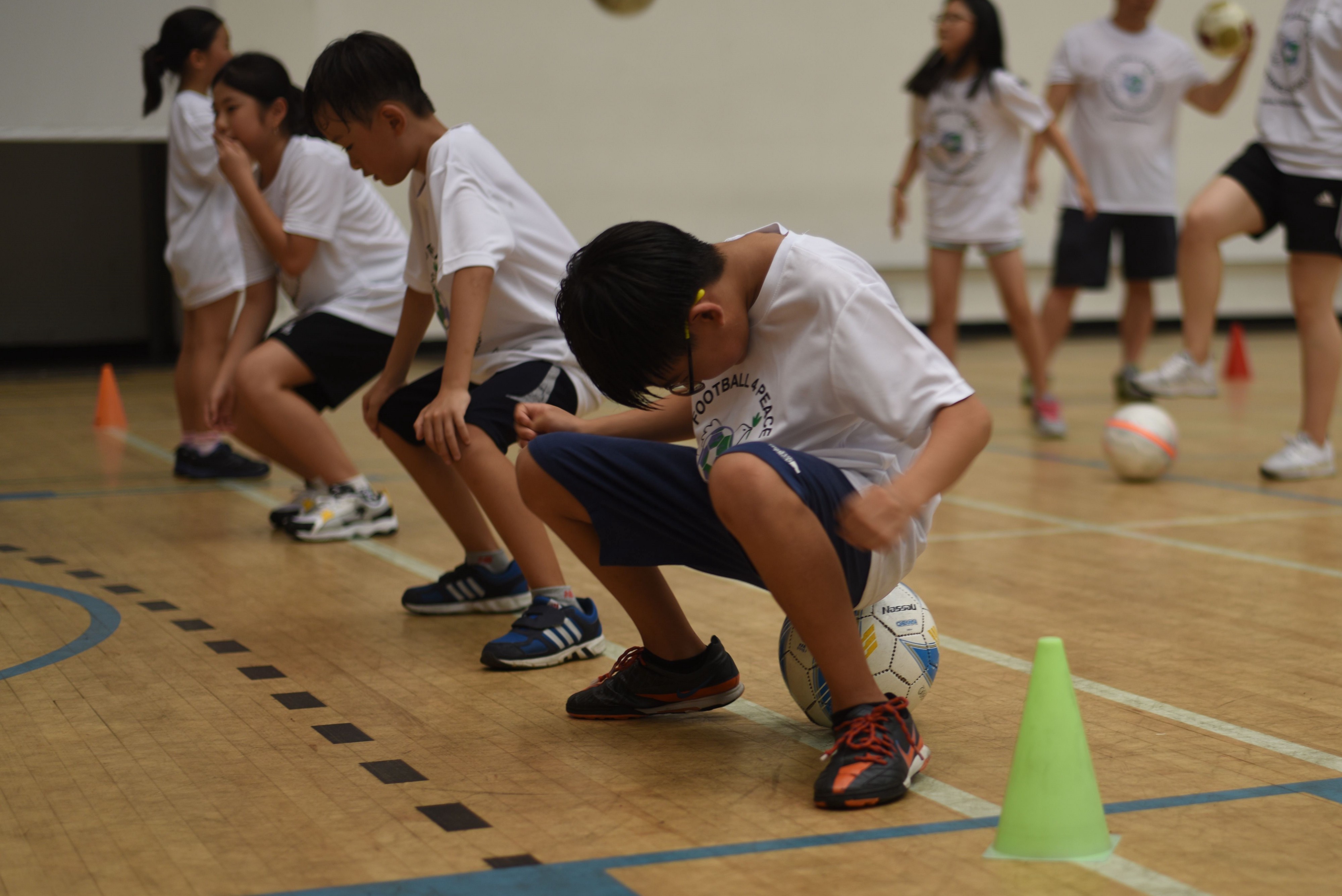
Kids are in action in the field
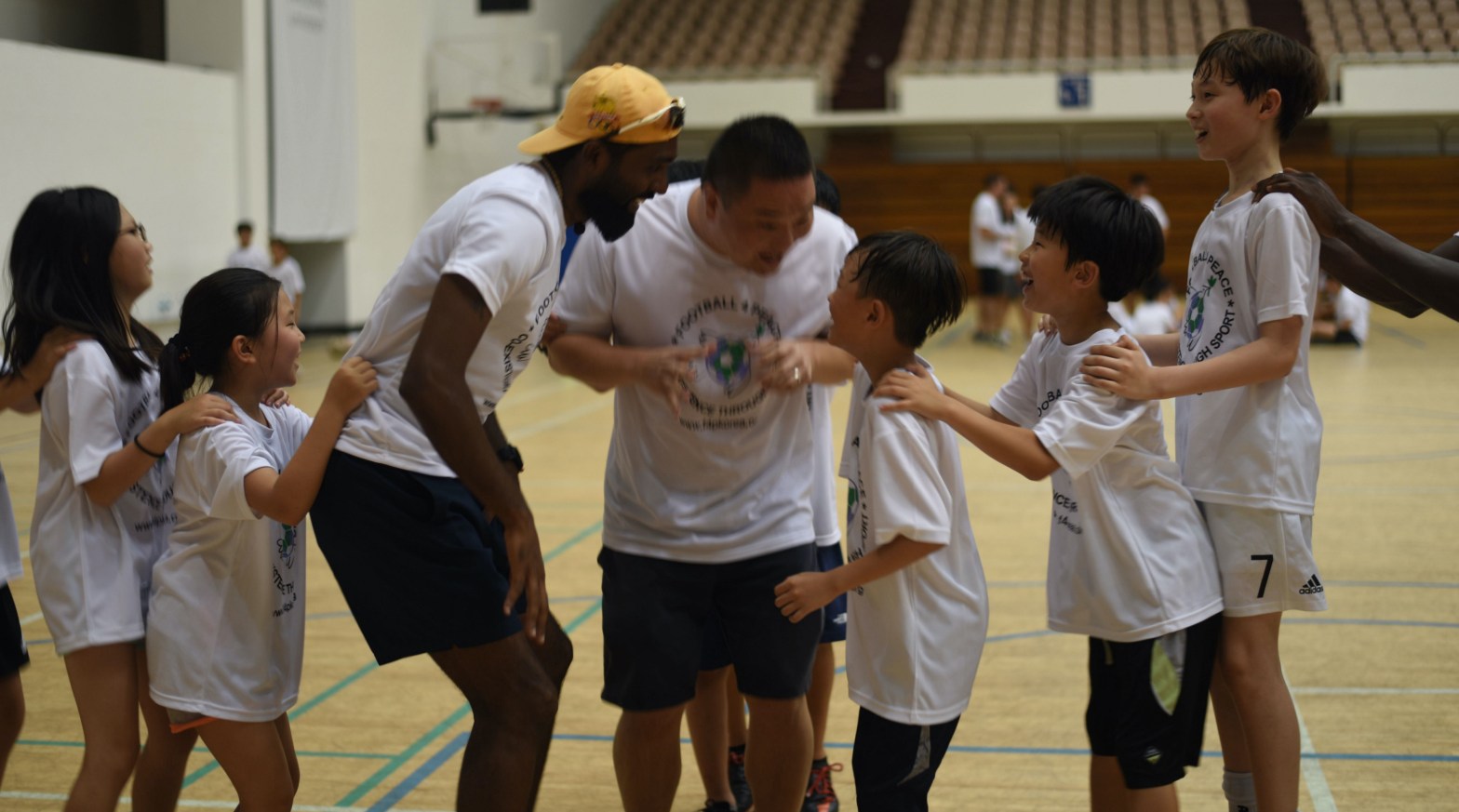
On the last day, some 70 kids were invited for a festival from various schools. A brief introduction of the program and the above-mentioned five values were taught by Dan and his colleagues with acts which attracted the kids. Then the kids were split into six groups. The participants of the camp also assigned as resource persons to each group of kids. Firstly, the kids were given some basic and fun activities to mingle with other kids and resource persons. After each of the activities, kids were asked what they have learnt out of the activity and the coaches explained more about the values.
As a graduate student of sport management at Seoul National University, it was praiseworthy to participate in such training camp. When I was an amateur athlete in the event of hurdles and three times Sri Lanka University Games Champion from 2009 to 2011, I had a lot of opportunities to attend in many coaching camps and training sessions for more than five years during my undergraduate in Sri Lanka. On the other side, I have been reading and was lecturing Olympic education to the sport administrators in my country as a provisional national course director at the National Olympic Committee of Sri Lanka. But, the F4P training camp brought me completely a different experience and was a comprehensive session too. I never learnt before the values during my training sessions that how an activity transforms to a value which helps us to promote mutual understanding in various communities.
Nicholas with Kelly
Zambian Nicholas said “the Football 4 Peace training camp provided an opportunity for me to recall the importance of values-based coaching. Contemporary sports training sessions do not put much emphasis on values. Usually, the main interest is improving athletes technically, tactically and physically. The training camp ignited the motivation in me to also pay much attention to values-based coaching. I believe that this methodology has great power to make better individuals in the society”.
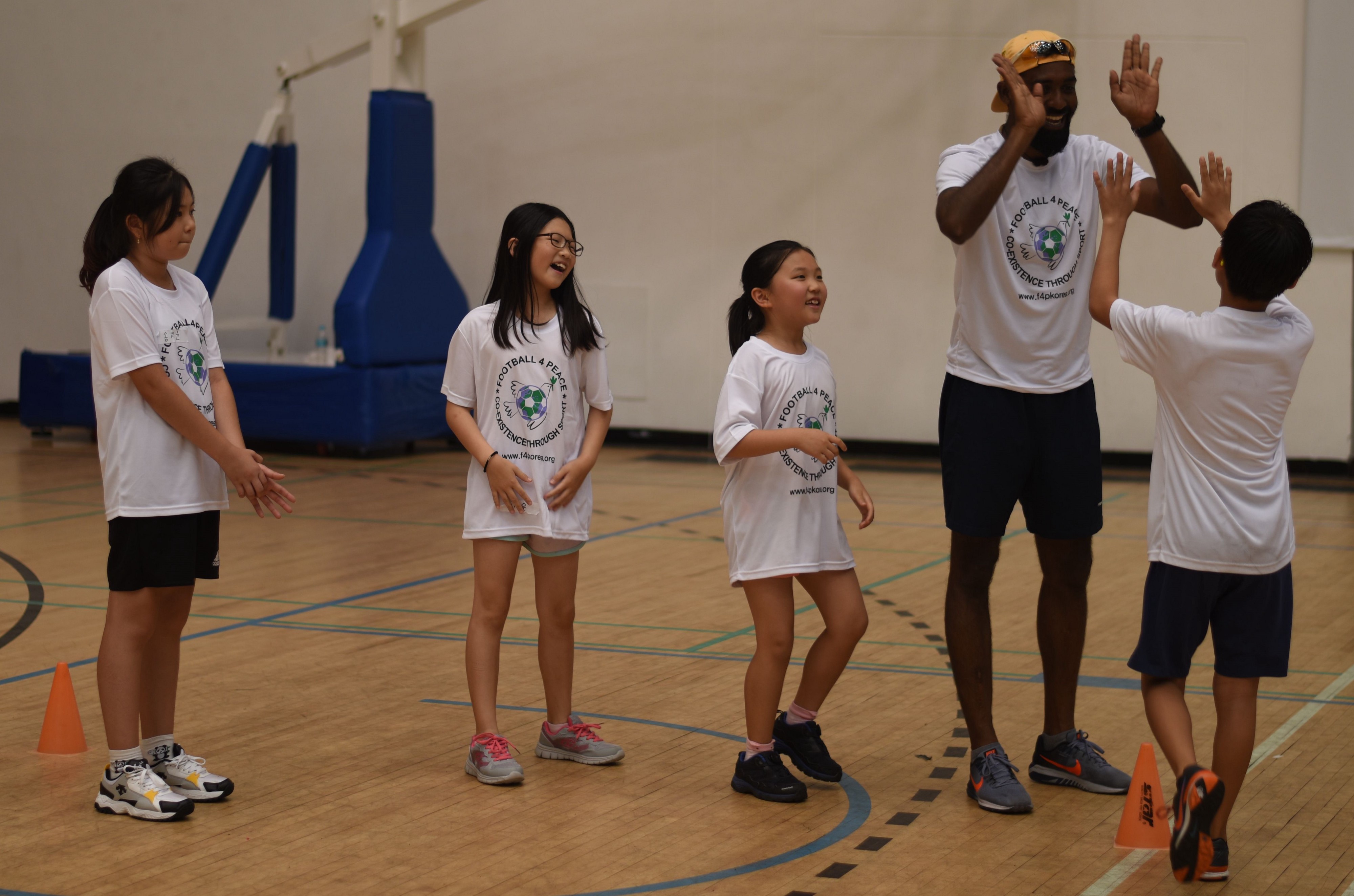
A high-five from Sigo to a kid
We play several games from our childhood. Sometimes, we do not really understand the values of the games. The F4P program teaches us to understand the values out of each game and every movement. Age is just a number; I really enjoyed the rat and rabbit, and truck and trailer games with our peacemakers through football. More than that, the values learnt from the games are valuable to me. When I was a coach to the kids in the festival, I learnt a couple of values how sport bring people without any barriers. Let me share them here as my learning outcomes.
Our very first activity was to introduce each other by high-five randomly. One of the kids of my group was running away from me when I was going towards him to have high-five a couple of times. Also, he was not much active compared to other kids in sports. I was so disappointed and was thinking, what’s wrong with me; is it because of my skin colour or appearance. Later, my Korean-mates said hey Sigo, leave him and do not worry. Eventually, we introduced several activities to the kids and in the end, the kids played football with other groups. While the kids were playing in the field, we were cheering our kids-team, Spain; that kid suddenly ran towards me and gave me many high-fives. That time, I was shocked and was thinking of how a couple of hours of football activities gave the energy of values to the kids — the power of sport. One of my Korean colleagues who is an undergraduate student from another university openly told me that I never see any black skin people very closed like I see now. She further told me that I do not think there are differences by the skin, we are global citizens. Sport creates that possibility to connect all community people together, she added.
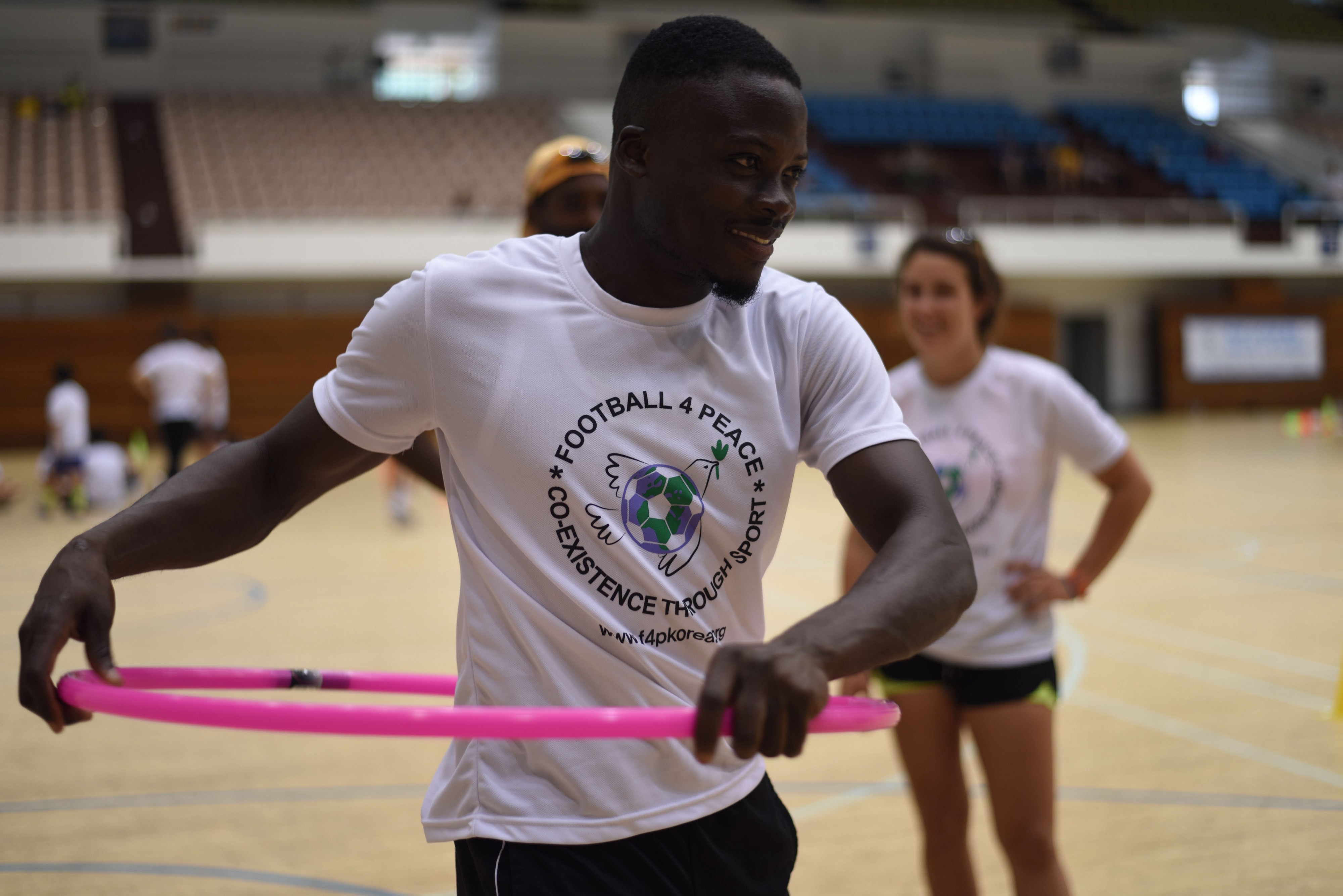
John enjoys in learning Hula hoop
Six Dream Together Global Sport Management Master’s degree students including me from Seoul National University took part in the training camp. One of my classmates John from Ghana said “the four days program helped to emphasize all the lessons I had on sport for development and peace. I was impressed how quickly children can pick up information if it is well conveyed to them. Children coming up with reasonable explanations on how and why they award other children a fair play point points to how far this approach can go if children can replicate this in their daily lives”.
“Amazing training and unforgettable experience. People would say that football is about winning and trophies, but Football 4 Peace taught me that to train human being is more important than a footballer. They have proven that everyone can play football regardless of gender, age, sexual orientation or nationality.” said Indonesian Rizki Kurniawan.
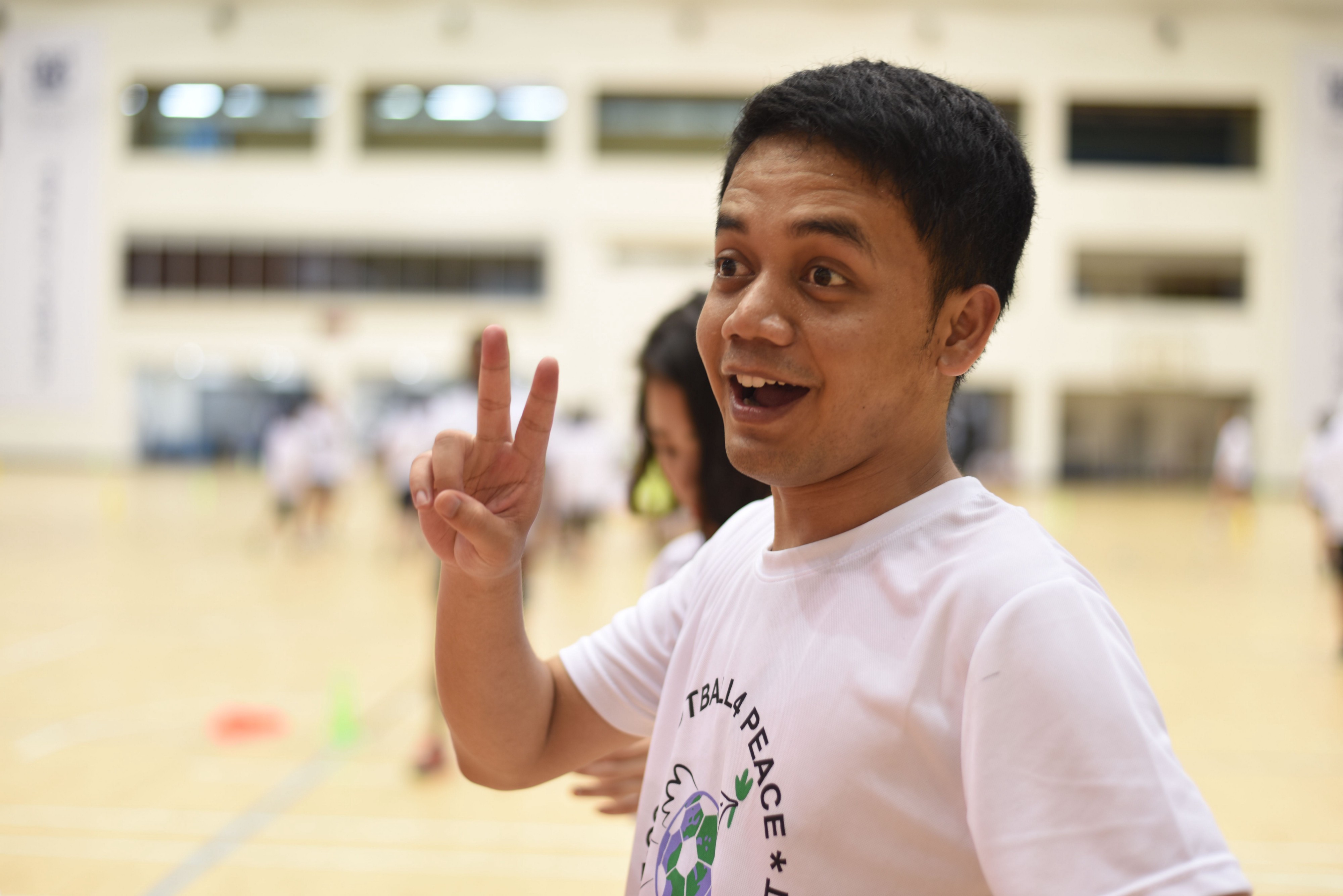
Rizki shows Peace
F4P is one of the unique programs in the globe to learn the five primary values and other values as well through football. As a person from the war-affected region in Sri Lanka, it was really worthful to me to participate in the training camp to wake my community up. Even the war is finished, there are still many conflicts because of many misunderstandings between the different races. I believe this type of program definitely promote peace and motivate the kids and youth to involve in sports to build up a peaceful community without any barriers.
For those unfamiliar with MoraSpirit, let’s take a moment to dive into its inspiring journey. MoraSpirit, founded in 2009, began as a visionary initiative by a group of undergraduates from the University of Moratuwa. Their mission was to empower university sports in Sri Lanka, a realm often overlooked despite its immense potential. Spearheaded by the innovative minds of Heminda Jayaweera and Dilanka Chintana Jayasundara, MoraSpirit quickly evolved into a vibrant platform providing comprehensive media coverage and unparalleled support for university-level sports. Over the past 15 years, MoraSpirit has become a beacon of inspiration, championing a culture of pride and passion in sports not only within universities in Sri Lanka but also extending its influence far beyond, fostering a dynamic and inclusive sporting environment.
SiGo’s connection with MoraSpirit
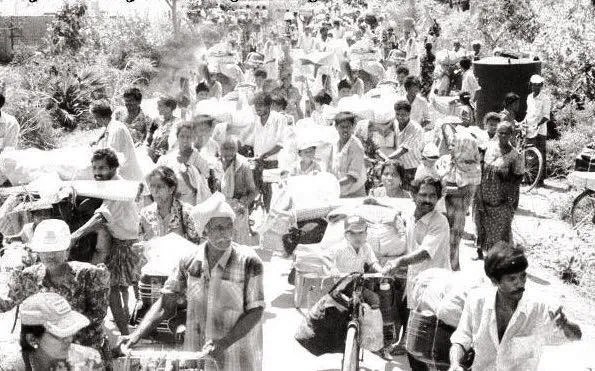
Leaving Jaffna in 1995: Taking only what was essential. PC: Tamil Guardian
The year 2009 marked a turning point for Sri Lanka, as the 30-year civil war came to an end in May. Among the early signs of hope and unity was the University of Jaffna’s track and field team embarking on a remarkable journey to the capital. It was the first trip to Colombo for many of us, a gruelling 18-hour odyssey over bumpy roads from Jaffna to Colombo. Despite the challenges of post-war life, including limited resources and facilities in Jaffna, we made it. Some of us didn’t even have proper shoes or spikes for this national-level competition, but we managed by borrowing or purchasing spikes upon reaching Colombo.
In those days, capturing memories wasn’t as easy as today. Smartphones with cameras were a rarity, and professional cameras were even rarer. I still recall seeing a few individuals equipped with Canon cameras and high-end mobile phones, diligently covering the event. Intrigued, we approached them and asked if they could capture some high-quality photos of our performances. Their willingness and enthusiasm to include us in their coverage left an indelible mark on me. Seeing those photos now, 15 years later, evokes deep nostalgia, taking us back to one of the most meaningful moments of our sporting lives – Thank you, MoraSpirit!
“True satisfaction and joy come from the act of volunteering”
Gobinath Sivarajah
That encounter introduced me to MoraSpirit. Inspired by their dedication, I reached out to some of the MoraSpirit team to learn more about their work. What struck me most was their spirit of volunteerism. MoraSpirit wasn’t just about media coverage—it was about building a movement. Over the years, they expanded their reach across platforms like Facebook, YouTube, Instagram, Twitter and TikTok, growing their pillars of engagement and attracting more University of Moratuwa undergraduates to join as volunteers.
I was honoured to contribute in my own way. At the invitation of MoraSpirit editors, I wrote a couple of articles for their platform. Whenever competitions were held at the University of Jaffna, I gladly provided accommodations at my home for visiting MoraSpirit members. This collaboration symbolized more than just sports—it was a testament to solidarity. Despite the scars of war and the differences we carried, we chose to grow together, fostering mutual understanding and respect.
MoraSpirit not only bridged the gap between universities but also served as a reminder of how sports transcend boundaries and unite us in a shared purpose. Looking back, it’s heartwarming to see how those early connections continue to inspire and uplift us today.
Jaffnaz Roar – A Model of Failure and Learning
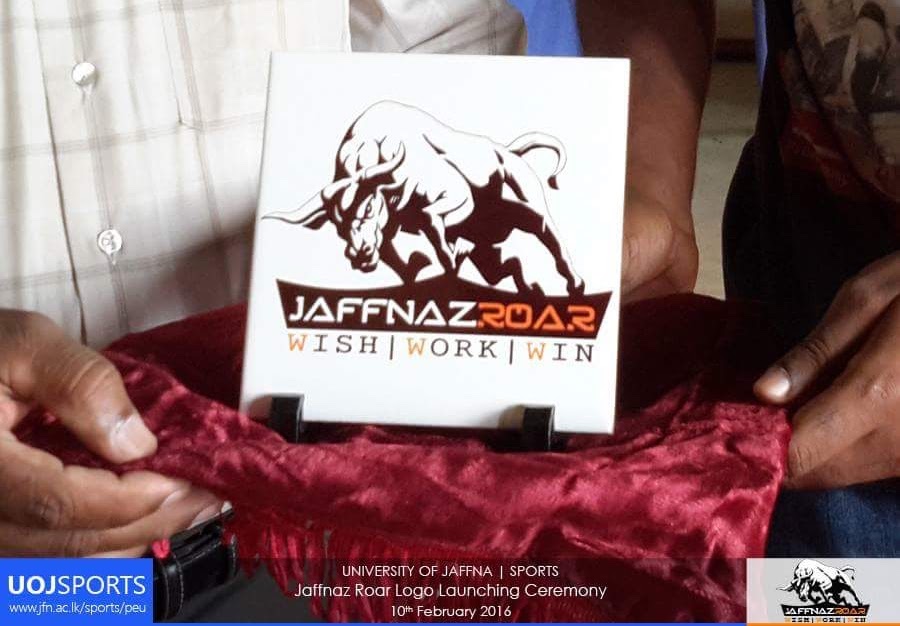
Jaffnaz Roar Emblem
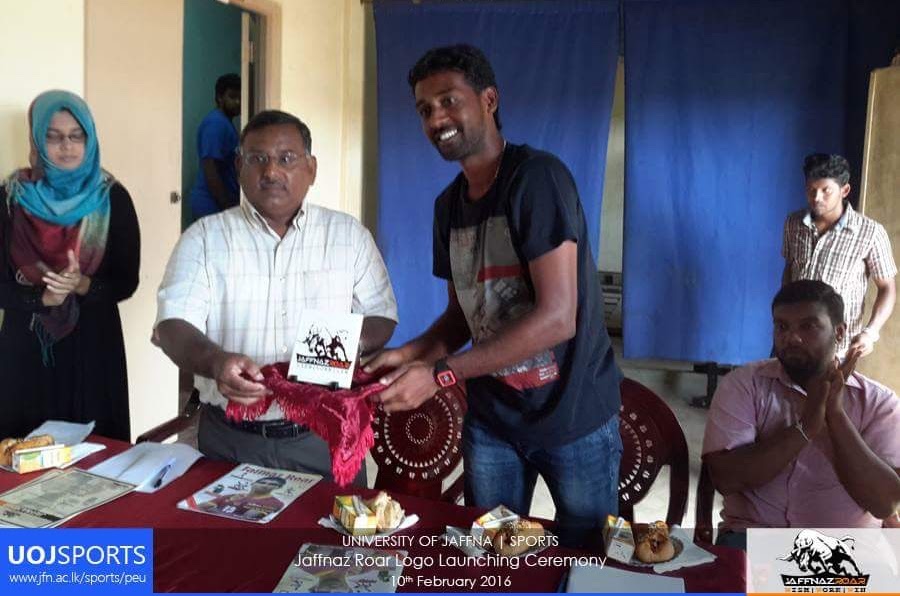
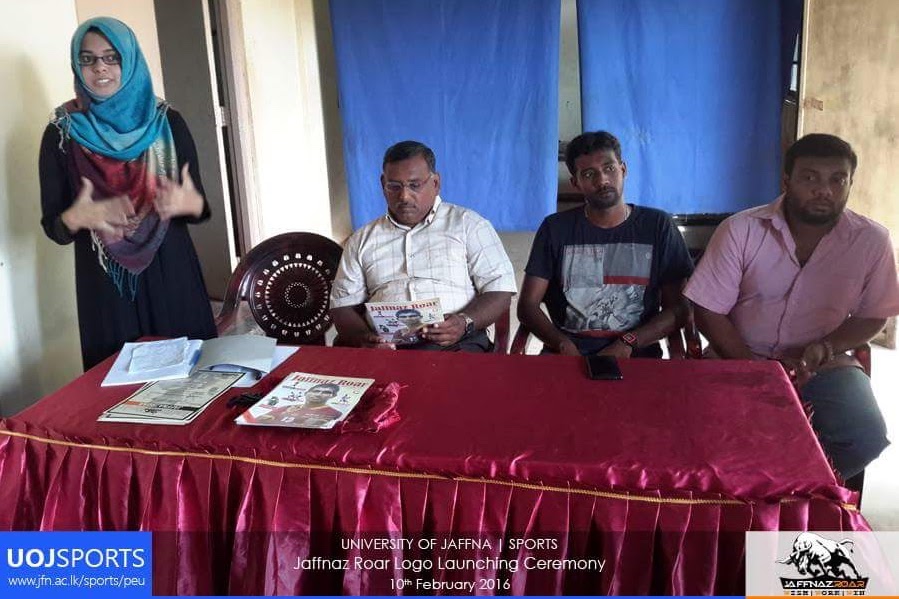
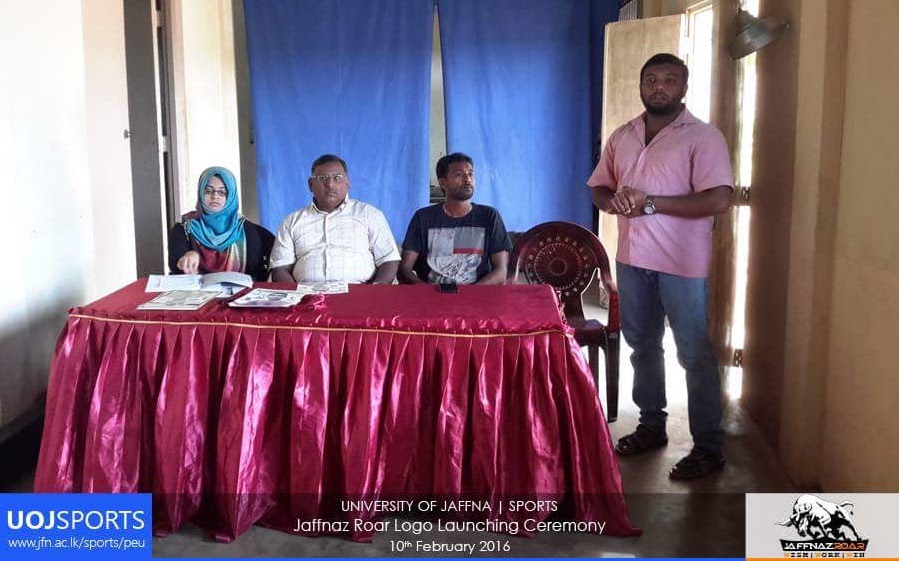
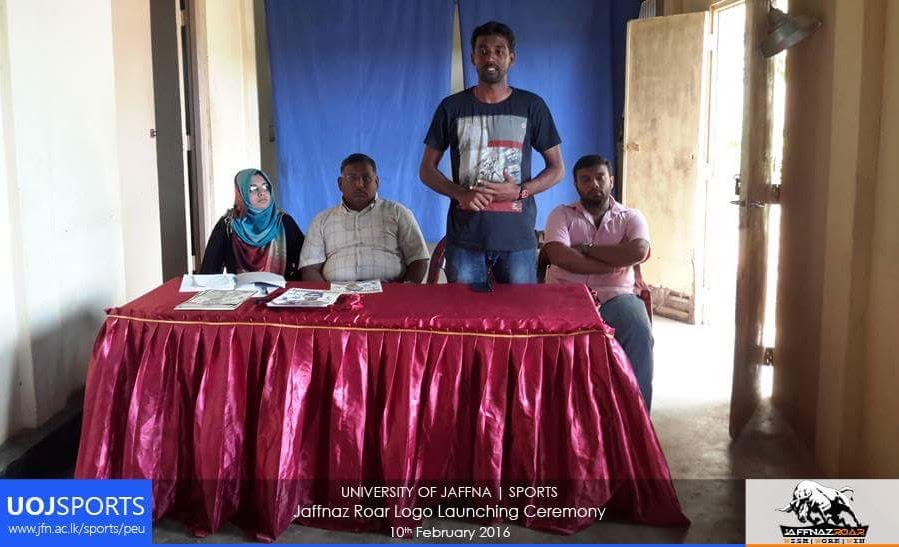
Inspired by MoraSpirit’s success, I envisioned creating a similar platform to celebrate and promote sports at the University of Jaffna. Fueled by this ambition, I gathered a group of enthusiastic undergraduates and organized a preliminary discussion to chart the way forward. Together, we conceptualized and launched a brand called Jaffnaz Roar. The launch event, held at the Physical Education Unit of the University of Jaffna on 10 February 2016, was met with great enthusiasm, supported by the blessing of the Unit’s Director and staff.
Jaffnaz Roar set out to shine a spotlight on local university events, provide visibility to the university’s athletes, and build a sense of pride within the sporting community. One of the highlights of this journey was the publication of a vibrant sports magazine under the Jaffnaz Roar banner. With a generous sponsorship of LKR 40,000 from a friend based in the United Kingdom, we brought the magazine to life. The financial backing wasn’t the challenge—there were always people willing to step in and support this cause.
However, as the initiative grew, I sought official recognition and support from the university. I approached the Vice-Chancellor to formalize Jaffnaz Roar under the university’s banner, hoping for institutional backing to ensure its sustainability. Unfortunately, the response was far from encouraging. Sports promotion wasn’t seen as a priority by the university administration, and the lack of support was disheartening.
Despite its initial promise and the passion of everyone involved, Jaffnaz Roar could not achieve its full potential. This experience was a harsh but valuable lesson in navigating institutional bureaucracy and understanding the systemic challenges of promoting sports in under-resourced regions.
While Jaffnaz Roar may not have endured, its spirit and the memories it created continue to inspire. It taught us the importance of perseverance, adaptability, and the need to advocate for the value of sports at every level of society. Failure is, after all, a stepping stone to future successes, and Jaffnaz Roar remains a significant chapter in my journey of learning and growth.
Journey with MoraSpirit
When my idea for Jaffnaz Roar didn’t resonate with the University of Jaffna’s administration, I redirected my energy toward supporting MoraSpirit, recognizing the incredible work they were already doing. Their dedication to empowering university sports was inspiring, and I saw an opportunity to extend their impact even further.
As I began my role as Marketing and Media Manager at the National Olympic Committee (NOC) of Sri Lanka, it became clear that MoraSpirit could play a pivotal role in transforming the NOC’s media presence. The NOC Sri Lanka media operations were running with limited resources and support, and MoraSpirit’s volunteer-driven ethos aligned perfectly with the organization’s values.
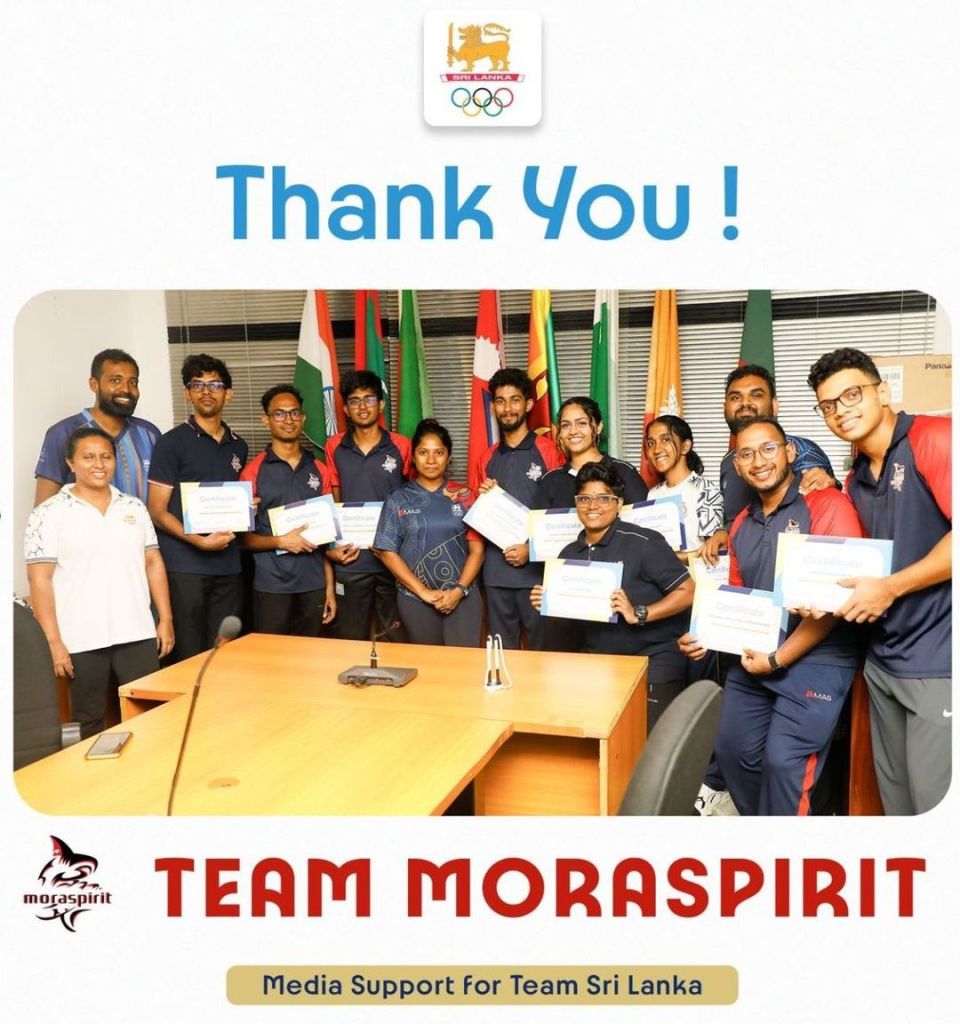
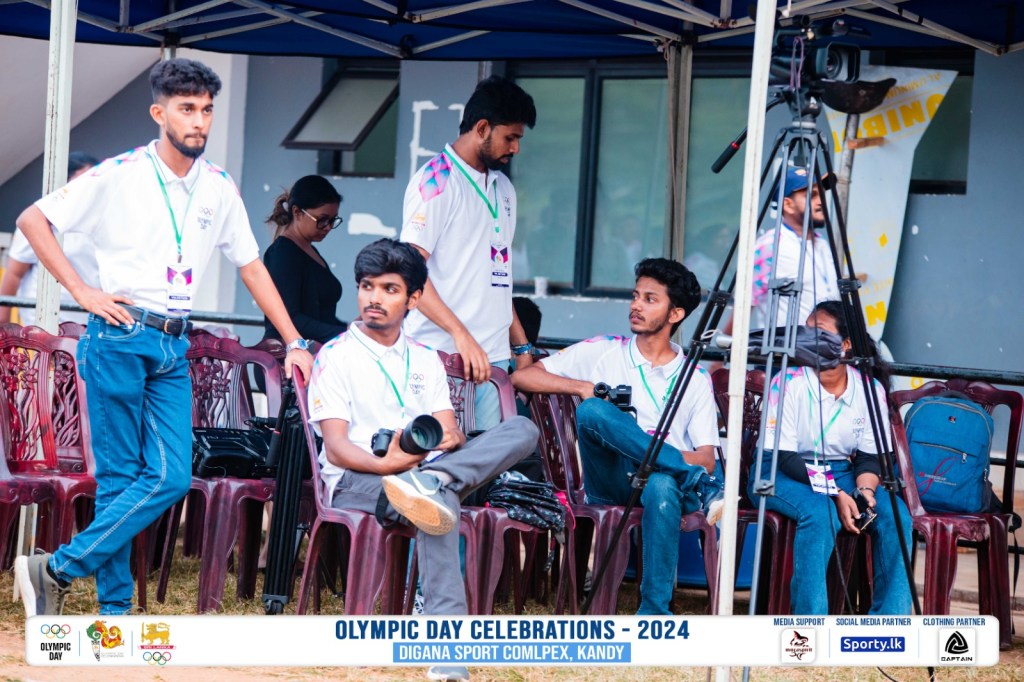
To build trust with the NOC, I initially involved MoraSpirit volunteers in smaller projects, such as one-day indoor events and article writing. Their professionalism, creativity, and commitment quickly impressed everyone. This success led to greater responsibilities and a series of significant collaborations where MoraSpirit handled complete media coverage for major national and international events. Here are some of the notable projects MoraSpirit collaboratively worked together with the NOC:
For these events, MoraSpirit delivered comprehensive media solutions, including photography, videography, live-streaming, article writing, and the design of social media posters, banners and other kits. For international games such as the Asian Games and Olympic Games, MoraSpirit served as the official media partner, providing exceptional social media coverage.
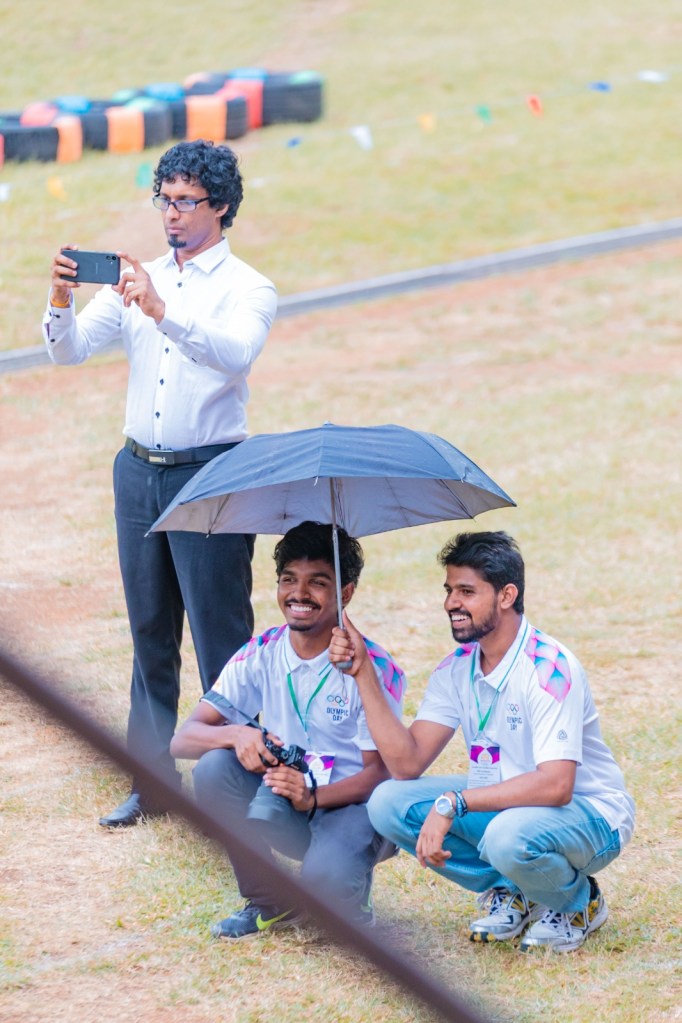
MoraSpirit volunteering for NOC Sri Lanka’s various program
It is praiseworthy to note that the Queen’s Baton Relay spanned three locations over three days, showcasing exceptional collaboration among university sports media teams. MoraSpirit seamlessly coordinated efforts with Perabeats from the University of Peradeniya and J’pura Flames from the University of Sri Jayewardenepura. This teamwork exemplified the unity and collective passion of Sri Lanka’s university sports community, ensuring comprehensive and high-quality coverage of this prestigious event.
Their contributions have been transformative, not only enhancing the visibility and professionalism of the NOC’s media presence but also showcasing the immense potential of volunteer-driven organizations. MoraSpirit’s journey from university-level sports coverage to becoming a trusted media partner for global events is a testament to their dedication, adaptability, and passion for sports.
This collaboration has been deeply rewarding, as it underscores the power of shared vision and collective effort. MoraSpirit continues to inspire the sporting community, proving that with commitment and teamwork, even the most ambitious dreams can be realized.
Recognition of Non-Mora SiGo
SiGo addresses at the 15th anniversary of MoraSpirit
A truly humbling and proud moment in my journey with MoraSpirit came during their 14th-anniversary celebration in 2023 when I was recognized by its founders. Heminda Jayaweera, one of the visionaries behind MoraSpirit, announced my appointment as Senior Advisor to the organization. For a graduate of the University of Jaffna to be honoured by one of Sri Lanka’s leading university media platforms was a moment of immense pride, symbolizing the unifying power of sports.
While I am deeply grateful to the MoraSpirit community, I continue to contribute not only through my knowledge but also by fostering global connections. By linking MoraSpirit with sports managers from various countries, I aim to strengthen collaborations and expand its reach, further enhancing its impact on the sporting world.
Crystal anniversary of MoraSpirit at the University of Moratuwa
In conclusion, MoraSpirit’s journey over the past 15 years is a testament to the transformative power of passion, volunteerism, and resilience. From empowering university sports to becoming a trusted partner in national and international events, MoraSpirit has shown how dedication can create a lasting impact. My own journey with MoraSpirit, from nostalgic beginnings to meaningful collaborations, highlights the power of unity and shared purpose in overcoming challenges. MoraSpirit’s evolution from a campus initiative to a beacon of sporting excellence inspires us all to dream big, work together, and leave a legacy that transcends boundaries, fostering a stronger, more connected sporting community.
SiGoSport Research Lab is interested in the field of Sport Management in the Sri Lankan context. The SiGoSport looks for young researchers from the Sri Lankan region on the below areas:
Sport Management – Facility Management, Service Quality Management, Governance;
Sport for Development and Peace;
Social Media;
Sexual Harassment and Abuse in Sport;
Sport Tourism
Sport Strategy Policy
SiGoSport Lab provides opportunities to the local young researchers to work collaboratively with the international young researchers in the international arena.
Just ask yourself – Am I?
a hardworking person
interested in any of the above-mentioned fields
passionate about researches
good at researching and reading
good at English and computer literacy
Sri Lankan
younger than 30 Years
If you are ready, just email your resume to sigo1985@gmail.com Oh no! Do not forget to mention your field of interest in your email.
SiGo = Sivarajah Gobinath
Master of Sport Management, College of Education, Department of Physical Education, Seoul National University, South Korea (2019)
BSc. Mathematics and Statistics, Department of Mathematics and Statistics, University of Jaffna, Sri Lanka (2011)
The Olympic Games are the pinnacle of any athletes’ career. Athletes put in a lifetime of work to make it to the global showpiece. For some, making it to the Games is just enough while for others, a podium finish is something ticked off their bucket list. They say numbers don’t lie and if we are to go by this old saying, it is a fact that some of seventy nations have never made it to the podium in the history of the Games. So, the million-dollar question should be why countries invest a lot of money over the four years leading up to the Games.
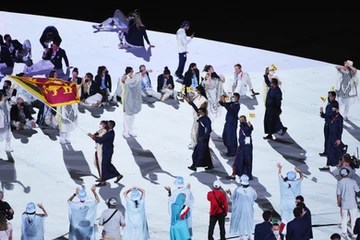
Team Sri Lanka at Tokyo 2020 Opening Ceremony
A nation is not defined by how big or small it is by its GDP or population. Here is an interesting fact – did you know that Bangladesh, the world’s 8th most populated country has not produced any Olympic medallist since it first took part in the Games in 1984? It’s not just Bangladesh that is part of this statistics – Monaco too falls in this lot!
So, should we define small nations as those that keep having a crack at the Games but only fall short at the final hurdle with the finish line in sight or those that have a small medal count? Perhaps we should try and examine where they get the hunger to keep going even when the going seems to be getting tough?
Speaking as one that comes from the so called ‘smaller nations,’ qualification to the big time for some of our athletes is a major achievement – I have seen this first hand!
We put in just as much work as the big boys or even harder but because of several factors, some of which are beyond our control as individuals we get the undesirable tag of ‘a small nation’.
The odds are against us even before the Games take center stage. We have no high-performance training facilities and the budget allocated to sports is not only grossly mismanaged but also a drop in the ocean. Let’s not forget the level of exposure many of these athletes that catapult their countries at the top of the medal table get throughout the four years leading to the Olympics by taking part at various meets and rubbing shoulders with the best there is in the business. This experience counts at the end of the day.
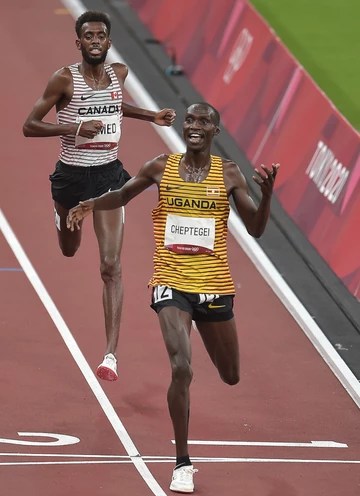
Uganda’s Cheptegei’s 5,000m winning moment at Tokyo 2020
USA, Canada and Great Britain might not have to dig deep in their pockets to send their athletes to some of these competitions but for many in the developing world, this is a Herculean task.
But then again you look at Kenya, Uganda and Ethiopia, these three seem to have identified their forte and give their all when it comes to long distance running, and it has paid off. Sri Lanka, Bhutan and Nepal including the rest of South East Asia should pick a leaf from these African countries. However, for this to be achieved we need to implement a strict policy on grassroot development sooner rather than later.
Maybe, just maybe if sports such as cricket and netball were introduced in the Olympic Games, Sri Lanka and India would be a force to reckon with every four years!










 SiGoSport