SEOUL — Women’s contribution in any field highly impacts a country’s socio-economic development. Though Sri Lanka is a very small country, women’s involvement in political and economic development is higher compared to other South Asian countries. Also, the literacy rate is more than 90 percent. But women’s participation in sports is notably insignificant.
Thilaka Jinadasa
The 12th article of National Sports Policy of Sri Lanka under the title of ‘Women to the Forefront in Sports’ urges more opportunities for women in sports. At the same time, it identifies many social issues as barriers to women’s participation in sports, among them cultural barriers, rituals and marriage, and attire issues — particularly among Muslim and Hindu women — and dining culture. Two more negative factors: lack of awareness about women in sports and, of course, 30 years of civil war.
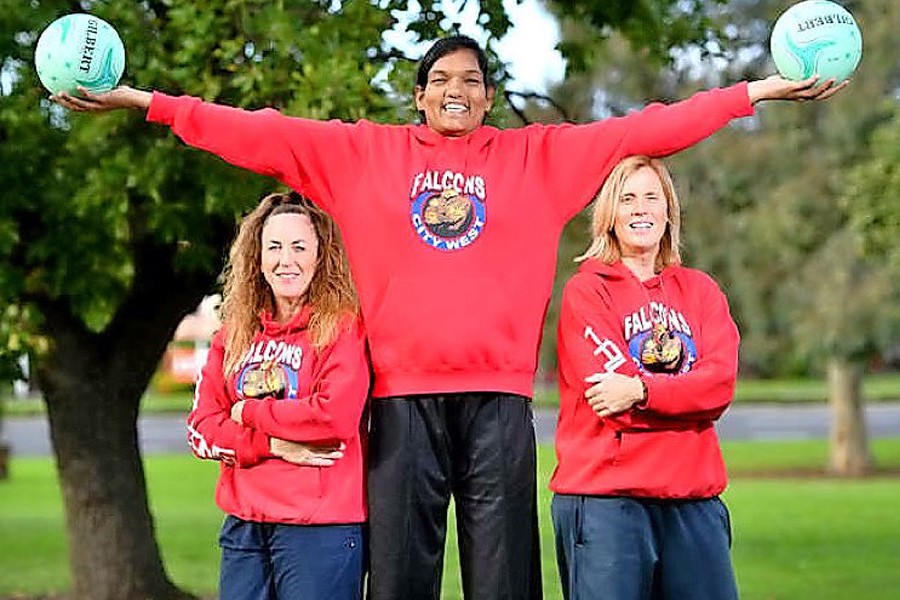
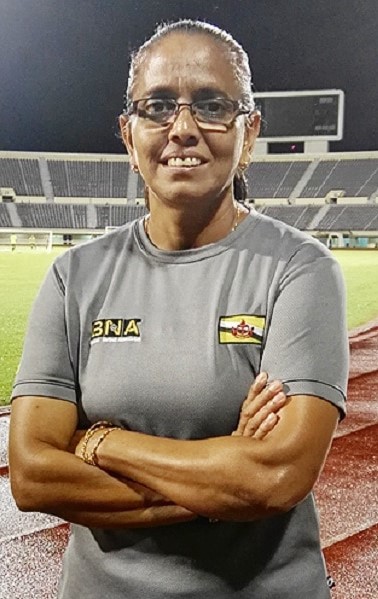
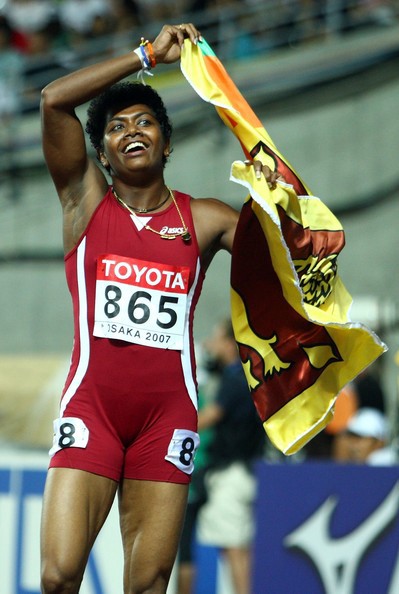
Indeed, the most successful Sri Lankan sportswomen’s life became unsuccessful because of political interference. For instance, Tharjini Sivalingam, ranked world №1 netball shooter, and Thilaka Jinadasa, first female Olympian and national netball coach, could not serve for their nation for many years. Lack of recognition and support from the government demotivates elite athletes to continue their career in sports. Therefore, both of the sportswomen flew to abroad and performed for Australia as a player and Malawi as national coach, respectively. Susanthika Jayasinghe, the first Asian sprint Olympic medalist, at Sydney 2000, was sexually harassed. Susanthika said, “I can’t explain. You wouldn’t understand. They give me, trouble, trouble, trouble. I give them bronze medal. It’ll make them sad… It was trouble with me. Doping and sexual harassment.”
Susanthika Jayasinghe, 200m Silver Medalist, Sydney 2000
The above-mentioned issues happened because of poor administration in Sri Lanka coupled with religious beliefs of the people. To overcome these fundamental issues, the ministry of sports and national federations ought to implement sport education programs starting from elementary school, give equal opportunity for women, empowerment workshops and recreational sports for mothers and elderly, which are few of the solutions to overcome the problem of insignificant women’s participation in sports in Sri Lanka.
Moreover, according to the International Olympic Committee’s Agenda 2020 plan, women’s participation in any kind of sport events should be treated equally. Therefore, sports participation and recruitment in any administrator sectors should be equally shared by 50 per cent of men and women. Also, recruiting and training more female coaches and administrators will enhance women’s participation in sports.
SEOUL — The 4th Peace Education through Sports Korea Coach Training is successfully concluded at Seoul National University.
A four-day training camp on ‘Football 4 Peace’ — F4P held at the Seoul National University from 09–12 August 2018 was hosted by Football 4 Peace Korea, Korean Sharing Movement. The F4P is not only a sports skill and technical knowledge enhancement program but also it teaches values-based sport coaching methodology through the medium of football. F4P aims to promote positive values associated with good citizenship. Especially, the F4P focuses on promoting the values of equity, inclusion, trust, responsibility and respect through football and rugby.
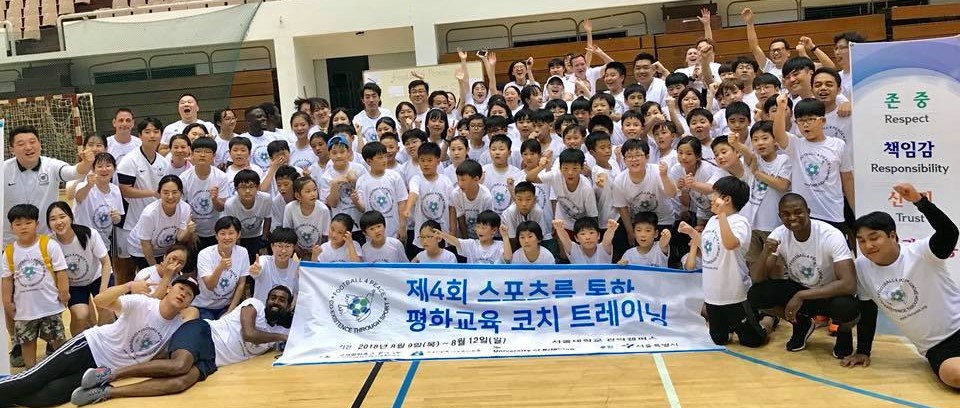
Football 4 Peace Resource Persons, Coaches and Kids
The first three days of the camp was designed to learn together the F4P International values-based coaching methodology, lectured by Graham Spacey and Warren Smart, the senior lecturers of the University of Brighton, the U.K and their students, Kelly Cranshaw, Millie Webb, Haemin Jung, Nicholas Anderson, Daniel Stidder also joined with them as resource persons for practical sessions on and off the fields. Also, Dan Gudgeon, the director of Football 4 Peace Korea, Korean Sharing Movement and some of his colleagues also were the resource persons for the camping. Some 50 participants from various universities and schools in Seoul took part in the training camp and they were awarded certificates for their active participation with a graded level of their achievement in the Cross-Community Sport Development Workshop.
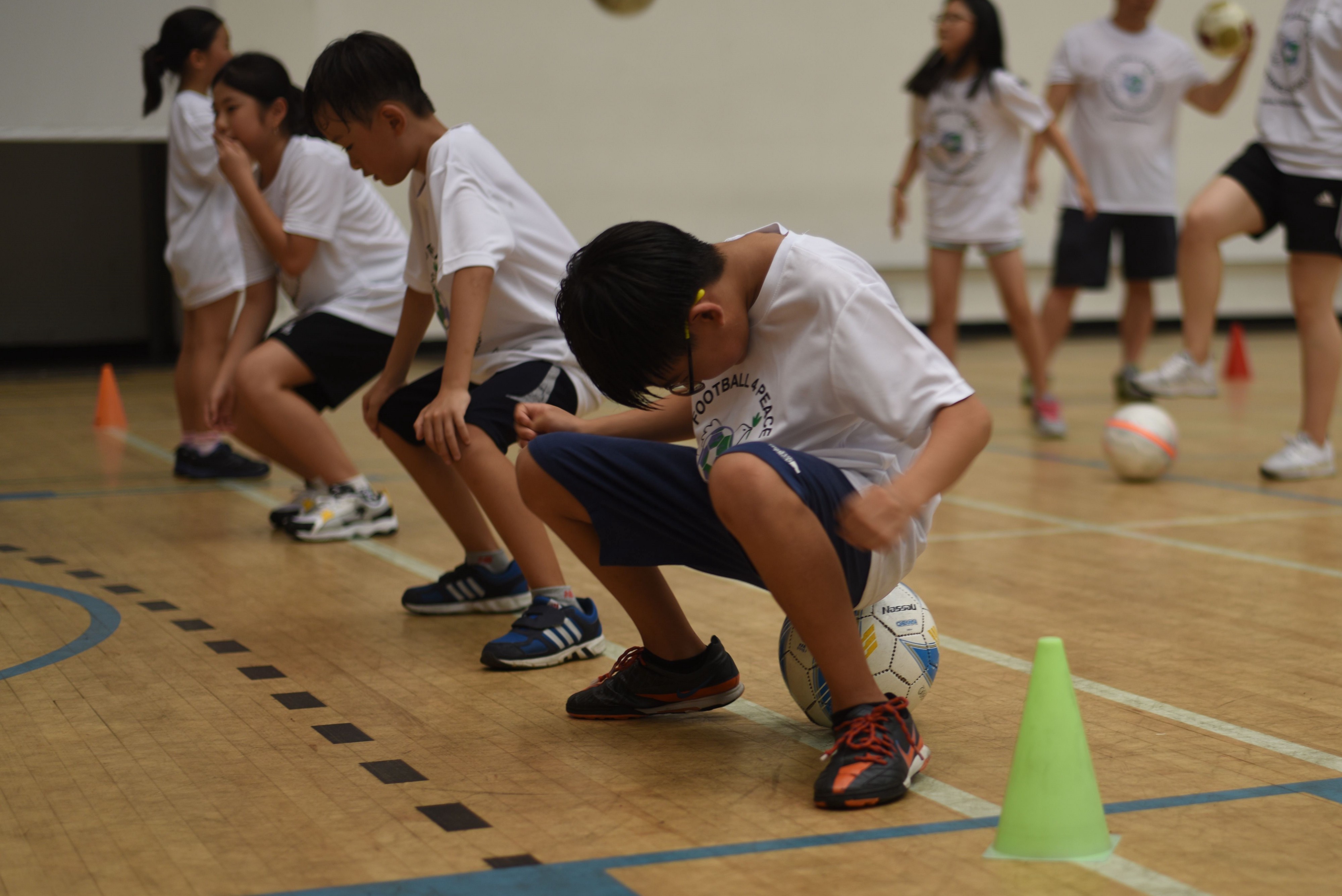
Kids are in action in the field
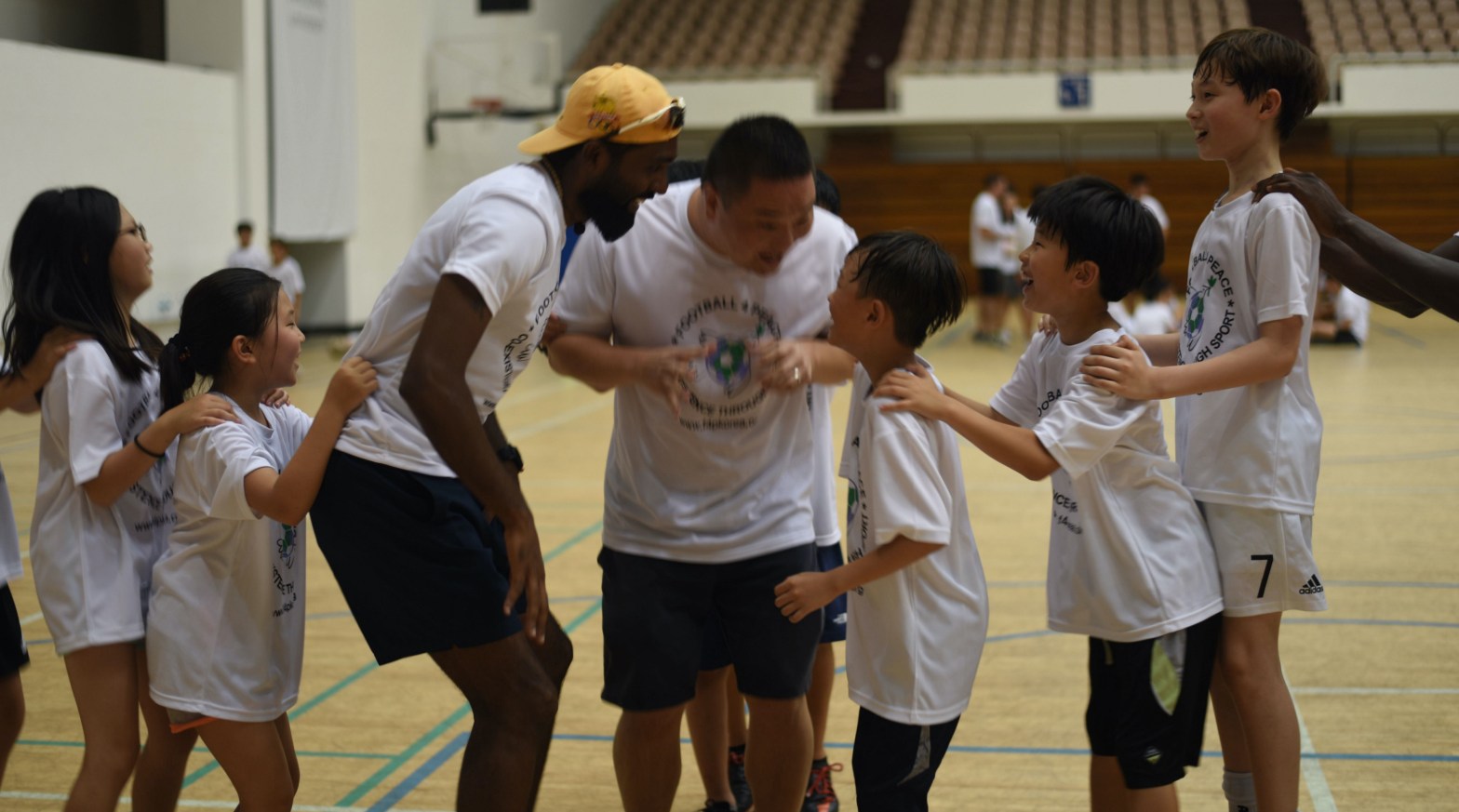
On the last day, some 70 kids were invited for a festival from various schools. A brief introduction of the program and the above-mentioned five values were taught by Dan and his colleagues with acts which attracted the kids. Then the kids were split into six groups. The participants of the camp also assigned as resource persons to each group of kids. Firstly, the kids were given some basic and fun activities to mingle with other kids and resource persons. After each of the activities, kids were asked what they have learnt out of the activity and the coaches explained more about the values.
As a graduate student of sport management at Seoul National University, it was praiseworthy to participate in such training camp. When I was an amateur athlete in the event of hurdles and three times Sri Lanka University Games Champion from 2009 to 2011, I had a lot of opportunities to attend in many coaching camps and training sessions for more than five years during my undergraduate in Sri Lanka. On the other side, I have been reading and was lecturing Olympic education to the sport administrators in my country as a provisional national course director at the National Olympic Committee of Sri Lanka. But, the F4P training camp brought me completely a different experience and was a comprehensive session too. I never learnt before the values during my training sessions that how an activity transforms to a value which helps us to promote mutual understanding in various communities.
Nicholas with Kelly
Zambian Nicholas said “the Football 4 Peace training camp provided an opportunity for me to recall the importance of values-based coaching. Contemporary sports training sessions do not put much emphasis on values. Usually, the main interest is improving athletes technically, tactically and physically. The training camp ignited the motivation in me to also pay much attention to values-based coaching. I believe that this methodology has great power to make better individuals in the society”.
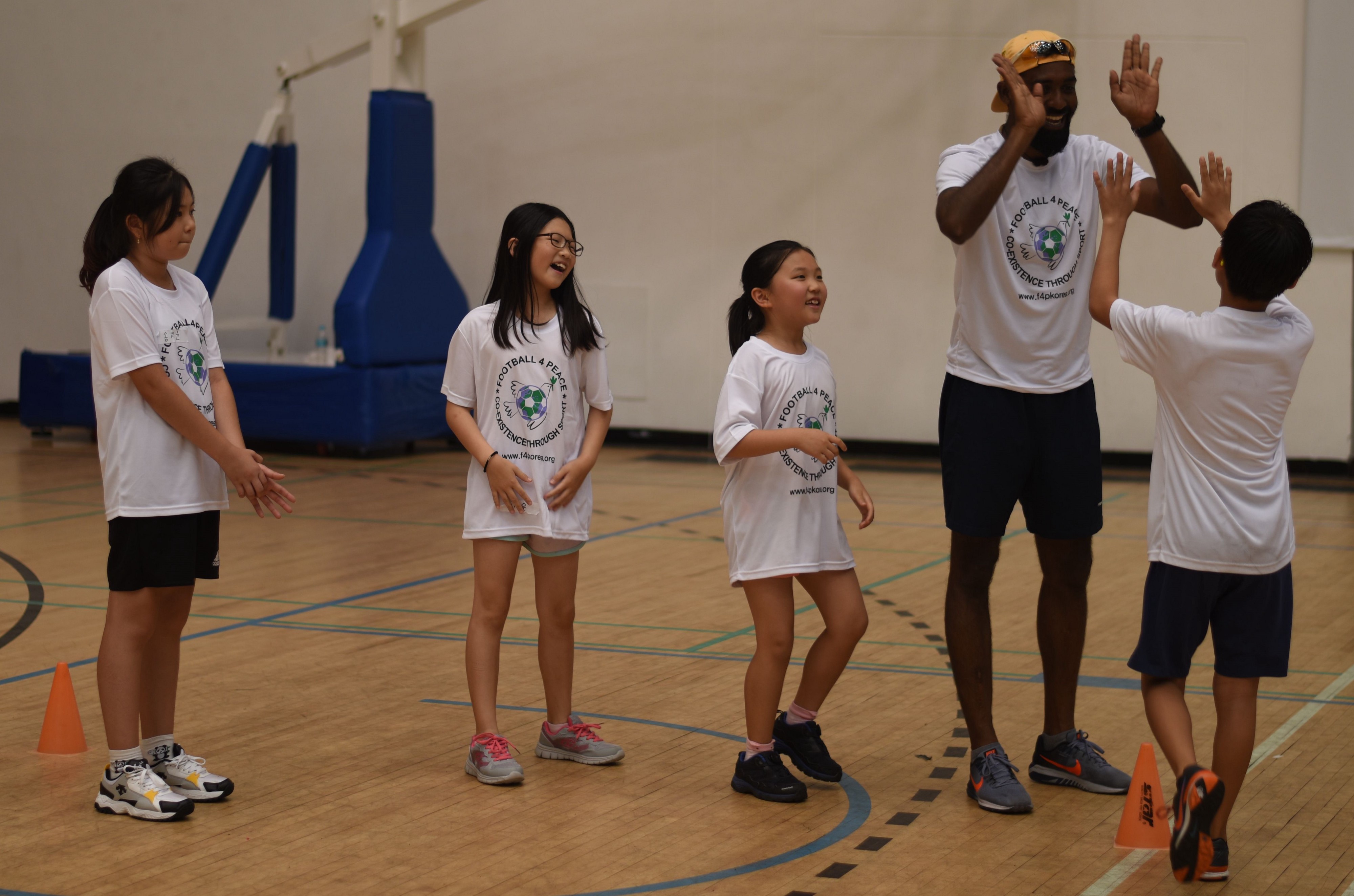
A high-five from Sigo to a kid
We play several games from our childhood. Sometimes, we do not really understand the values of the games. The F4P program teaches us to understand the values out of each game and every movement. Age is just a number; I really enjoyed the rat and rabbit, and truck and trailer games with our peacemakers through football. More than that, the values learnt from the games are valuable to me. When I was a coach to the kids in the festival, I learnt a couple of values how sport bring people without any barriers. Let me share them here as my learning outcomes.
Our very first activity was to introduce each other by high-five randomly. One of the kids of my group was running away from me when I was going towards him to have high-five a couple of times. Also, he was not much active compared to other kids in sports. I was so disappointed and was thinking, what’s wrong with me; is it because of my skin colour or appearance. Later, my Korean-mates said hey Sigo, leave him and do not worry. Eventually, we introduced several activities to the kids and in the end, the kids played football with other groups. While the kids were playing in the field, we were cheering our kids-team, Spain; that kid suddenly ran towards me and gave me many high-fives. That time, I was shocked and was thinking of how a couple of hours of football activities gave the energy of values to the kids — the power of sport. One of my Korean colleagues who is an undergraduate student from another university openly told me that I never see any black skin people very closed like I see now. She further told me that I do not think there are differences by the skin, we are global citizens. Sport creates that possibility to connect all community people together, she added.
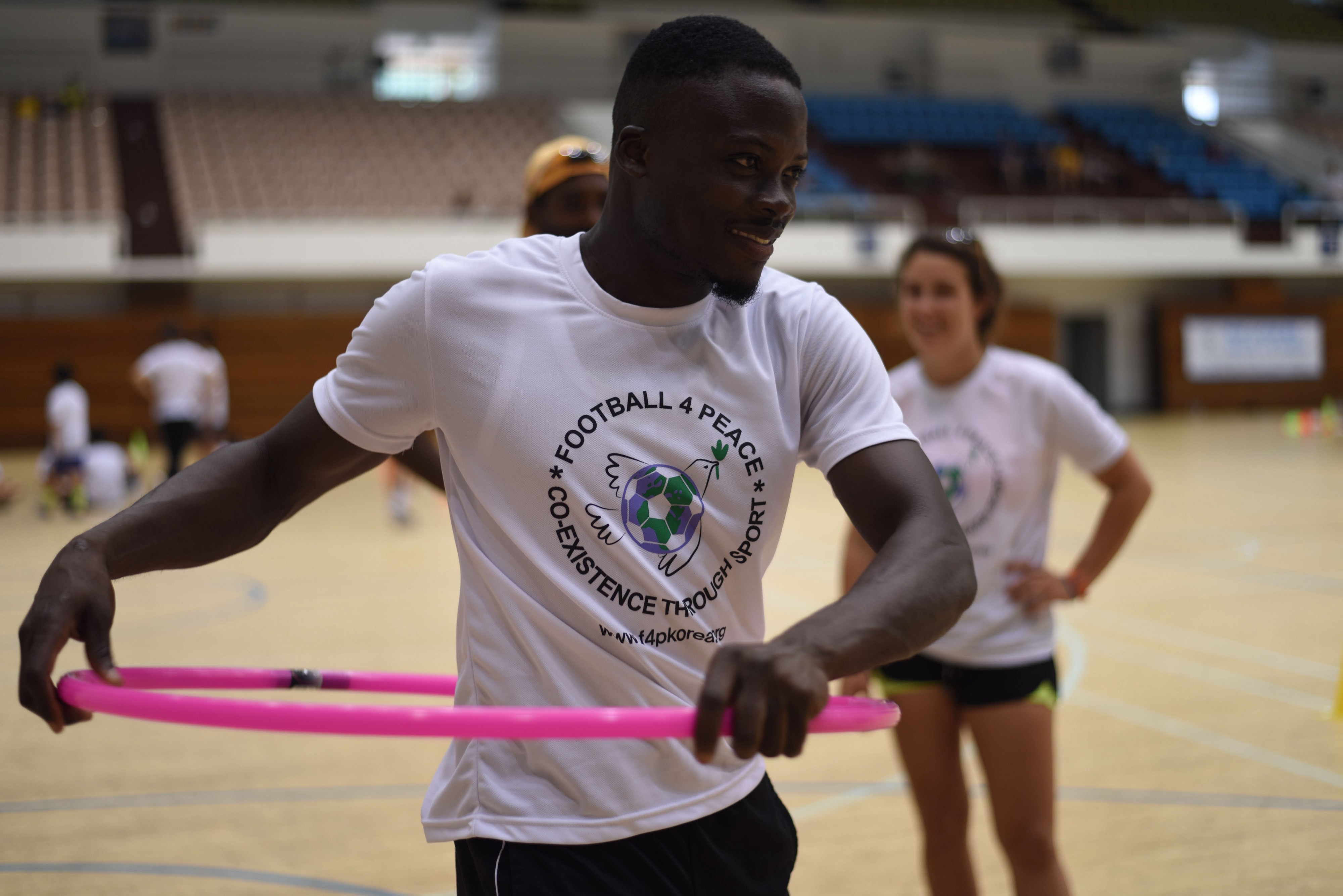
John enjoys in learning Hula hoop
Six Dream Together Global Sport Management Master’s degree students including me from Seoul National University took part in the training camp. One of my classmates John from Ghana said “the four days program helped to emphasize all the lessons I had on sport for development and peace. I was impressed how quickly children can pick up information if it is well conveyed to them. Children coming up with reasonable explanations on how and why they award other children a fair play point points to how far this approach can go if children can replicate this in their daily lives”.
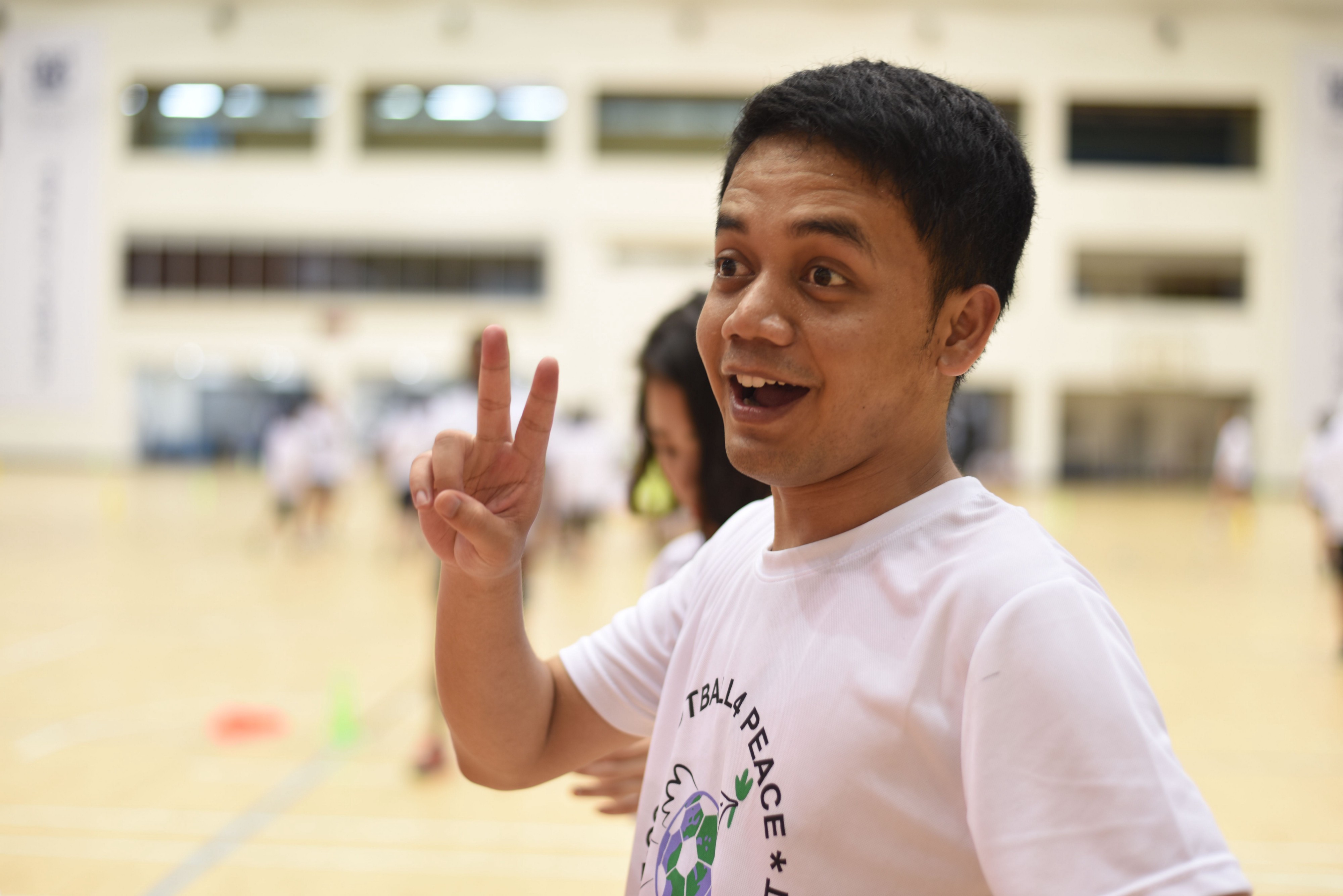
“Amazing training and unforgettable experience. People would say that football is about winning and trophies, but Football 4 Peace taught me that to train human being is more important than a footballer. They have proven that everyone can play football regardless of gender, age, sexual orientation or nationality.” said Indonesian Rizki Kurniawan.
Rizki shows Peace
F4P is one of the unique programs in the globe to learn the five primary values and other values as well through football. As a person from the war-affected region in Sri Lanka, it was really worthful to me to participate in the training camp to wake my community up. Even the war is finished, there are still many conflicts because of many misunderstandings between the different races. I believe this type of program definitely promote peace and motivate the kids and youth to involve in sports to build up a peaceful community without any barriers.


 SiGoSport