
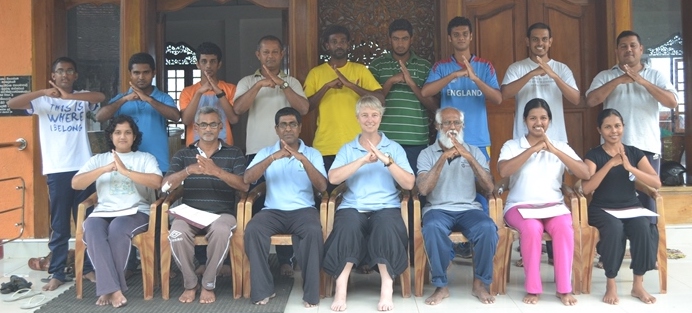
Qigong (also referred to Chi Kung) forms were developed by the ancient Chinese about 5000 years ago as a method of meditation and self-cultivation. From the word Qigong, ‘Qi’ is referred to energy (Indians refer it in Yoga as “Paraná”) and ‘gong’ to work. Simply saying, Qigong is the exercise of a human’s energy. In 1979, Professor. Lin Hou Shang created Tai Chi Shibashi, which has 18 movements of Tai Chi Qigong and invented Qigong information therapy instrument. Now, Qigong is becoming popular with more than ten million people practicing Tai Chi. Malaysia and Indonesia consider Tai Chi as their national health exercise, since it is very renowned in helping in the cure of stress, hypertension and cancer. Moreover, Tai Chi is a source of power for physical energy and sexual health.[3]
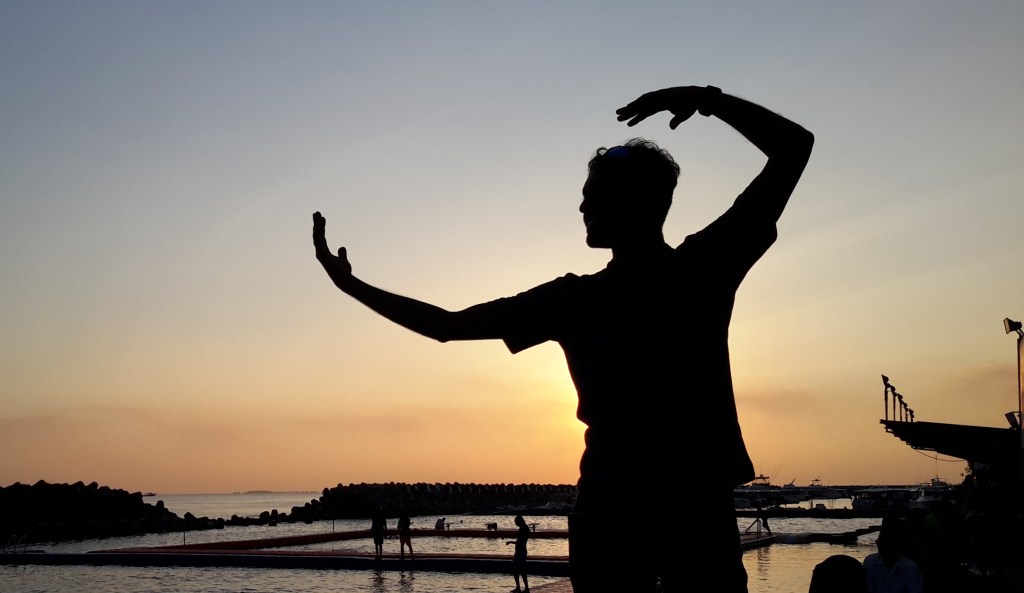
In sports, only a few athletes practice Tai Chi for developing their vitality. Athletes and coaches do not approve of Tai Chi and they think that Tai Chi exercises reduce the performance of athletes, since Tai Chi movements are very slow and related to the mind. Also, athletes are only interested in speed, heavy and mechanical exercises to achieve their goal within a short period. Further, some athletes use drugs or illegal medicines (as doping) to increase their performance. But, they do not consider how it is going to affect their future health and consequently misunderstand the concept of Tai Chi. In Tai Chi, continuous practice and patience are required. Generally, Tai Chi helps to develop the skills in some hip movement related games. Particularly, it is very helpful for throwing events in athletics, badminton, cricket, surfing, kitesurfing, skateboarding, snowboarding and skiing.
Tai Chi skills which rejuvenate the mind, spirit and body, coincide with the concept of sports. Tai Chi cultivates the awareness of Dan Tien which means “Elixir Field”, located in the abdomen approximately three inches below the navel and above the public bone, where energy is stored.[1] Tai Chi practice fills energy psychologically by giving a sense of stability and balance when the athletes are faint or at their stage of unconsciousness or when muscles tire by overloading. Generally, an athlete takes approximately two hours to recover his physiological energy after the performance or practice. But, Tai Chi reduces the recovery time by providing stored energy from Dan Tien. Furthermore, Tai Chi makes the joints and muscles more flexible.[2] Basically, the throwers in athletics use their hip to achieve their higher performance since more power produces from the hip.
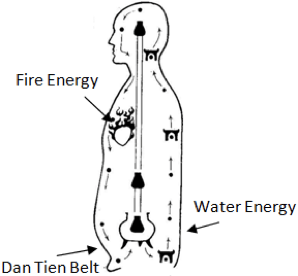
When an athlete is getting excited or nervous before or during the competition, s/he needs to calm down within a short period. That time, a very simple first movement of Tai Chi Qigong Shibashi exercise can be practiced at least 20 times to calm down. Normally, heart produces fire energy and kidney produces water energy. When we get excited or are fearful, water energy increases. Therefore, we have to reduce the water energy to be free from fear and excitement. When we are doing Tai Chi, fire energy quenches the water energy as illustrated in the figure. This kind of skills help mind concentration related games such as badminton, cricket, chess, etc. When an athlete gets charged with emotion, fire energy increases and Tai Chi Qigong Shibashi neutralises by quenching the fire energy. Sometimes, athletes may need some emotions to win the game or to achieve their maximum performance when they are tired. That time too Tai Chi aids in a similar manner.
Athletes worry during off-season, periods of injured and rainy seasons when they cannot practise, control their weight or at least do any stretching exercises. But, Tai Chi Qigong Shibashi controls the weight and by burning less energy, it produces more and store at the Dan Tien. Since Tai Chi is very easy to learn and it needs only a small space, anyone can do it anytime they feel free. Even if you are injured, some Tai Chi exercises can be practiced in seated position. Since there are few instructors in Sri Lanka, you can visit the website www.taichi18.com and practice yourself as it is very easy to catch on.
“Tai Chi does not mean oriental wisdom or something exotic; it is the wisdom of your own senses, your own mind and body together as one process.” – Chungliang Al Huang –
References:
- Agnes S. Chan et al, Am. J. Chin. Med.34, 207 (2006). doi: 10.1142/S0192415X06003771
- Schaller KJ, (1996). “Tai Chi Chih: An exercise option for older adults”. Journal of Gerontological Nursing 22(10):12-17
- Wilson, Paul. (1995). “Instant calm”. Penguin Books Australia Ltd. ISBN 0-14-024494-8.
***The End***
Author: SiGo | Thursday, January 07, 2021
 SiGoSport